Tag: police-involved shooting

  • Chicago police shooting of Laquan McDonald

    The video is out. Finally. After long attempts to sweep it under the rug failed.

    This Sun-Times editorial provides good background.

    It’s a bad shooting. (Though honestly I was expecting even worse, like an unarmed rationally behaving victim.) The mayor (now, at least) and the police chief have said the officer is at fault.

    The officer who killed McDonald fits the pattern of bad cops: high activity, drug work, too many complaints. Sure, all the complaints weren’t justified, but some of them were. And undoubtedly he did a lot of bad shit that people didn’t file formal complaints about.

    From the Washington Post:

    The allegations against Van Dyke include 10 complaints of excessive force, including two incidents where he allegedly used a firearm, causing injury. He was also accused of improper searches and making racially or ethnically biased remarks. Four of the allegations were proven factual, but Van Dyke’s actions were deemed lawful and appropriate. In most of the other cases, there was either not enough evidence to prove or disprove the complaint or the allegation was proven unfounded.

    The data shows that it’s rare for any officers to be penalized, and white officers were half as likely as black ones to be disciplined for a complaint.

    Apparent repeat offenders — officers with more than 10 complaints against them — represented 30 percent of all complaints, even though they made up only 10 percent of the police force.

    That distinction [the most complained-about officer] goes to Jerome Finnigan, the subject of 68 citizen complaints in nearly two decades with the Chicago Police Department; none of the allegations resulted in disciplinary action.

    In 2011, Finnigan was convicted of robbing criminal suspects while serving on an elite force and ordering a hit on a cop he thought might turn him in. At his sentencing, Finnigan admitted to having become “a corrupt police officer,” according to the Chicago Tribune. But he said the police department was aware, and for many years did nothing.

    “My bosses knew what I was doing out there,” he said, “and it went on and on. And this wasn’t the exception to the rule. This was the rule.”

    68 complaints and a criminal conviction and no disciplinary action?! That is rotten.

    So this cop shows up on a scene and, rather than doing nothing, gets out of his car, puts himself almost in harm’s way, and kills this guy. And then keeps firing. Fires 16 shots. No other cop saw a need to shoot. Because there was no need to shoot. You contain, retreat, or make do. Then you tase this guy. Or what about having shields and a straight baton?

    Anyway, will Chicago riot like Baltimore? No. For two reasons. First of all there is now legal accountability. That’s the way the system is supposed to work. You murder somebody? You face justice. Second, unlike Baltimore Mayor Rawlings-Blake and former Police Commissioner Batts, the political and police leadership in Chicago have a minimum level of basic competency.

    Update: Here’s the initial account(hat tip to Chris Hayes)
  • “The most disturbing thing I’ve seen”

    Two (black) cops were criminally charged in the fatal shooting of a (white) six-year-old boy in Louisiana, who was in a car, I guess being chased.

    I haven’t seen the video, so what do I know? But Colonel Michael Edmonson, the Superintendent of the Louisiana State Police, said footage of the incident was, “the most disturbing thing I’ve seen.” Damn. “The two officers were arrested on Friday after body-camera footage taken from them was assessed.”

  • Meanwhile, in Brazil

    Meanwhile, in Brazil

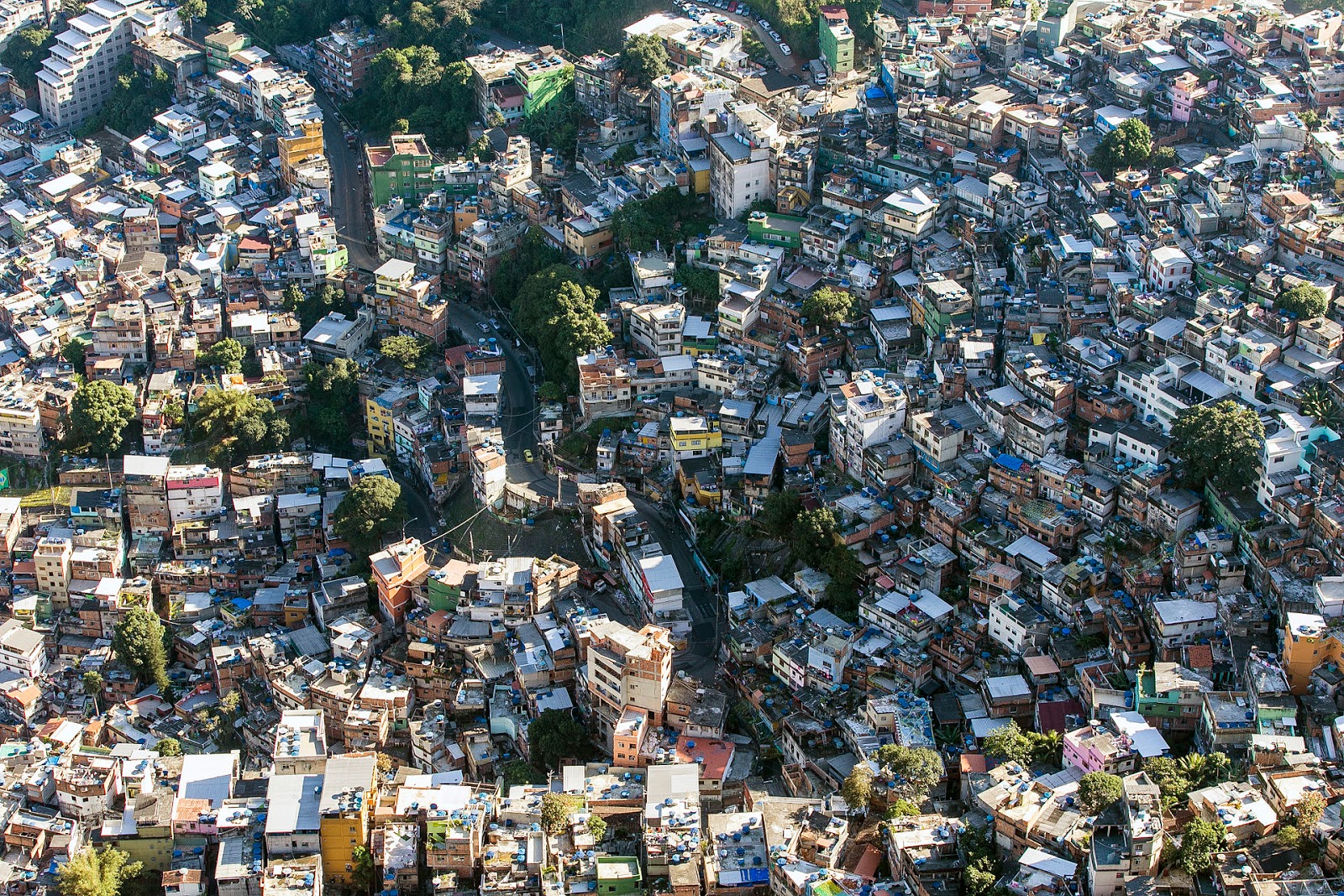
    In New York City, police have killed 281 people over the past 10 years. Meanwhile, a friend just gave me this a fun tidbit, in Rio de Janeiro (which is smaller than NYC) over the past ten years police have killed 8,466 people! That’s crazy. That means that every day police kill 2.3 people in that city. Just think of the normalized bureaucracy that must surround that. The only other place that might come close is Jamaica. And maybe parts of India. I don’t know.

    79 percent of those killed in Rio are black, however they define it.

    De acordo com relatório lançado em agostodeste ano pela Anistia Internacional, 8.466 pessoas foram mortas pela Polícia Militar do Rio de Janeiro nos últimos dez anos. Dessas mortes, 99,5% envolviam homens, dos quais 79% eram negros e 75% tinham de 15 a 29 anos.

  • Killed by police, Washington Post analysis

    Washington Post reporters are doing what journalists are supposed to do. They’re looking at those killed by police (like the Guardian, but a bit more fairly).

    815 have been shot dead by police this year as of right now (the Guardian, just FYI, pushes that number to 948. That’s a 15 increase based on people that really shouldn’t be counted because it includes things like suicide and non-police custody).

    Of the 815, 31 are labeled “undetermined” in terms of “threat level” and thus questionable as to their justification. Of those 10 each were white, black, and hispanic. But even among those 30, 11 had a deadly weapon.

    76 of the 815 were “unarmed” (28 of 76 black). 29 of those 76 “unarmed” are labeled “attack in progress.” 39 “other.” 8 “undetermined.”

    Overall, 203 are determined to be mentally ill. That’s one in four. And 40 percent of all whites. “Just” 15 percent of blacks are considered mentally ill. I assume there are labeling errors here. I suspect more mentally ill blacks are not labeled as mentally ill when killed by police. But hell if I know. Regardless, that difference jumps out at me.

    Of the total number, 390 were white, 208 were black, 134 hispanic. 32 were women.

    I keep harping on the state differences. And for good reason. The top ten states by rate (from the Guardian) of police-involved homicides (from the Post) have about 20 of the US population and 298 (36 percent) of police-involved homicides. The rate of police-involved killings in the ten worst states, (extrapolated from 10 to 12 months) about 5.4 per 100,000, is greater than the overall level of homicide in the United States. Period.

    Damn.

    Meanwhile the best ten states (police in these states are least likely to kill people) have nearly the same population as the ten worst states just and 67 (8 percent) police-involved homicides. That’s an annual rate of about 1.2 per 100,000.

    That’s a big difference.

    The states where police kill the most are OK, NM, WY, AK, AZ, LA, WV, NV, CA, and CO.

    The states with the least lethal cops are VT, ME, RI, CT, NY, ND, PA, MA, IL, and IA.

    Is gun control a factor? Maybe. The top 10 average rank is 15 according to the Brady Campaign’s rank of gun control. The bottom ten rank 31. But I suspect that is mutual causation or correlation without causation. Gun culture in general more than gun control in particular. There are outliers galore: California ranks 1 on gun control and cops killed 150 people; meanwhile Vermont (1/60th the size of California, mind you) ranks 44 on gun control, but police have killed nobody.

    The biggest divider I can see is simply East/West. You can draw a sharp line between the top 10 and bottom 10 with the Mississippi and Missouri Rivers.

  • “The Stop”

    Ashley Cleek’s piece on car stops in Life of the Law. Nice piece. And I’m quoted in it.

  • Who’s Counting?

    Chava Gourarie at Columbia Journalism Review with a great piece on data and police-involved killings.

  • “Was the Shooting of Tamir Rice ‘Reasonable’?”

    Another good story by Leon Neyfakh in Slate. This one with some legal analysis on the two reports that judged the shooting of Tamir Rice in Cleveland “reasonable.”

    Here’s a link to the audio of the radio dispatch.

  • 2015 NYPD firearms discharge report

    2015 NYPD firearms discharge report

    From the NYPD firearms discharge report for 2014:

    In adversarial conflict, 58 NYPD officers fired 201 rounds in 35 incidents.

    In total, 104 NYPD officers fired 282 rounds shot in 79 incidents.

    18 incidents involving animal attack.

    There were 4 suicides.

    In adversarial conflict:

    41% of officers fired one round. No officer had to reload.

    52% of those shootings were in Brooklyn.

    14 suspects shot and injured.

    8 shot and killed.

    1 suspect was “unarmed.”

    4.9 million “radio assignments involving weapons.”

    4,779 gun arrests.

    1,172 criminal shooting incidents.

    2 officers injured.

    2 officers killed.

    To put the NYPD in perspective, according to the data from the Guardian’s The Counted, 7 people have been killed in New York this year (2015). Compare that some other cities:

    Miami and Indianapolis: 8 each.

    Dallas and Oklahoma City: 7 each.

    San Jose, San Francisco, Austin, Las Vegas (NV): 6 each.

    Bakersfield, CA: 5.

    Collectively those cities have fewer people than New York City. And those other cities have seen 53 people killed by police this year.

    For the NYPD:

  • Data on police-involved killings of unarmed civilians

    The creators of StreetCredrecently brought their work to my attention. They like data. So do I. They’re trying to flesh out the situations when police kill an unarmed person. Unarmed does not automatically mean a person isn’t a threat. It’s interesting that the majority of these cases are not officer initiated but involve police response to a call for service for a crime in progress.

    From their study:

    Of the 125 incidents in which police killed an unarmed civilian, 25% (31) began on traffic stops, and 65% (81) began as a response to a 911-call about a violent crime (robber, E.g.,[i], carjacking[ii], domestic violence[iii] or assault[iv]) or property crime (burglary[v], car theft[vi] or vandalism[vii]) in progress.

    In addition to those, there were nine people (7%) whom 911 callers described as being, “crazy[viii],” or, “on drugs[ix]”, “covered with blood[x]”, and “yelling[xi]”, or threatening people[xii]. Three (2%) were wanted[xiii] fugitives[xiv] in the act of escape[xv] — and one was unarmed when he died but was acting as part of a gang of three who were wanted in a recent homicide and were at the time of the incident in the progress of a kidnapping a woman[xvi].

    In all, there were 26 incidents that involved an assault by the unarmed civilian against another civilian before police arrived, and in two cases, the murder of other civilians by the decedent.

  • Bad shooting in Gardena, California

    Usually when I get called from the media about a police-involved shooting I expect I’m going to have to explain how a reasonable police officer might perceive a potentially lethal threat.

    Not here.

    This is a bad shooting:

    The killing happened two years ago. The video was just released. The officers faced no legal consequences. The city paid $4.7 million. The victim, Diaz Zeferino? Never heard of him before yesterday:

    Three media outlets pushed for its release…. A judge granted their request, saying it was in the public’s interest to know why that city money was being spent.

    Why are these cops so afraid? Why it is so obvious to me, formerly a reasonable police officer, that the guy is holding a hat and thus isn’t holding a gun?

    Might this help demonstrate why citizens of California are 50 percent more likely than the national average and almost 4 times more likely than New Yorkers to be killed by police.