Tag: race

  • The New York Times goes to the Hood

    I applaud any effort to focus on the victims of violence in America. Too often nobody knows or cares about this real carnage in this country.

    So over Memorial Day weekend the New York Times went to the bad parts of Chicago to sightsee:

    [We] dispatched a team of reporters, photographers and videographers to virtually all of the shooting scenes across the city. Working around the clock through the three-day weekend, The Times interviewed relatives, witnesses, police officers and others, and captured how much violence has become a part of the city’s fabric.

    After that self-congratulatory moment (wow, did they really work “around the clock” on a “three-day weekend”?!) I really did have high hopes for this 5,000-plus word article. But I was left feeling empty. Though I can’t quite put my finger on the problem, let me try.

    Murder victims should be humanized. You’re not just a homicide victim. You’re a real living human being with lives and stories and loves and problems. (And also, as cops know all too well, with soft flesh and blood and sometimes spattered brain matter.)

    This weekend, among the six killed are a father, Garvin Whitmore, who loved to travel but was scared of riding on roller coasters; and Mark Lindsey, whose outsize personality brought him his nickname, Lavish. The oldest person struck by a bullet is 57. The youngest person to die is Ms. Lopez, a high school student and former cheerleader.

    And so the logic of one Chicago mother, who watches another mother weep over her dead son in their South Side neighborhood, is this: She is glad her own son is in jail, because the alternative is unbearable.

    “He was bound to be shot this summer,” she says.

    That last part is powerful. Let’s be clear: a mother says she’s happy because her son is in jail, because otherwise he would probably be killed. As Yakov Smirnoff says, “what a country“!

    The Times reports that one victim was just watching the Newlywed Game on TV. Another has an “outsize personality.” (Though I’m not certain what that means, his nickname of “Lavish” raises my eyebrow. And how can you a “former cheerleader” at age 15? But maybe I protest too much….) I’m torn between my usual line, “damnit, these victims are Americans we should care about!” and “damnit, this is tear-jerking PC bullshit!”

    I quibble with this Times’ portrayal because most murder victims in Chicago (and other cities) are not just normal hard-working people with normal jobs who happen to be in the wrong place at the wrong time. Sure, sometimes the street draws in kids despite loving moms. Maybe mom is too busy working poorly paid jobs to keep an eye out on her child. But too many never had a loving parent when they needed to be brought up right.

    Cops see this all the time: living situations where little kids are growing up without any structure, much less electricity or a functional loving parent. Dad might be dead or in prison; mom might be turning tricks to support her addiction. Then what? What happens to the kids sleeping around mice and roaches, three to a bare mattress? Nobody talks to the kids, much less reads to them. Kids are simply ignored or neglected, ineffectively raised by siblings and cousins. What if you parents try to sell you for drug money? [Update: What if your dad shoots your grandfather at your uncle’s funeral?] How do you think you’re going to turn out?

    These things need be discussed, but the Times doesn’t want to go there. You might say I’m blaming the victim (because I am), but my point is not that “these people” deserve to get shot and killed (call me a pinko-lefty, but I’m firmly in the camp of those who believe that nobody deserves to be shot and killed). The problem is that if we don’t accurately address the real problem and characters involved — if we only romanticize victims and blame bad luck — we’re never going to get at effective solutions.

    This gets more at the truth:

    Sometimes only minutes after the gunshots end, a computer system takes a victim’s name and displays any arrests and gang ties — as well as whether the victim has a rating on the department’s list of people most likely to shoot someone or be shot.

    Police officials say most shootings involve a relatively small group of people with the worst ratings on the list. The police and social service workers have been going to some of their homes to warn that the authorities are watching them and offer job training and educational assistance as a way out of gangs.

    Of the 64 people shot over the weekend, 50 of them, or 78 percent, are included on the department’s list. At least seven of the people shot over the weekend have been shot before.

    For one man, only 23 years old, it is his third time being shot.

    As a cop, this makes me question the operational effectiveness of the “strategic subject list.” But as an editor, I would say this point needs to be more developed.

    You can’t say with certainty that an individual who is shot is also a shooter, but you can hazard a bet that a 23-year-old who has been shot on three separate occasions has also pulled the trigger a few times. On the front end of every murder is a murderer. Collectively the pool of murder victims is the pool of murderers. An exclusive focus on victims as victims glosses over the fact that many of the victims are the problem. They are murderers. (And, as the article points out, these murderers are not being arrested.)

    The Times quotes a Mr. Hallman:

    “Why did I gang bang?” asks Johnathan Hallman, 28, who lives on the South Side. “Just to be around something, like just to be a part of something, man. Because when you growing up, man, you see all these other people, older people that’s in the gang life or whatever. They making they little money and they doing they thing. You see the little ice, the car they driving. It’s just an inspiration, man.”

    Mr. Hallman says he joined a gang at a young age, but eventually decided it was not all he thought it would be. He got out, he says.

    Is he a good guy because he got out of the game? Hell if I know. But what about all the people who never got involved in the first place? Even in bad neighborhoods, it’s not normal to gang bang, shoot people, or be shot.

    Or take Mr. Roper, 24:

    who grew up in the Englewood neighborhood, says he had occasionally carried a gun to protect himself from being robbed, but never used it. “I have to have a gun to scare them off,” he says.

    Poor Mr. Roper. Personally I’m thinking that Mr. Roper is part of the problem. Does the Times really think Chicagoans should carry illegal guns for protection? Their editorial board has certainly preached to the contrary. Are young men who don’t carry guns irrational or somehow wrong? So what is the Times position on people’s needs to carry guns in Englewood?

    And then there’s Ashley Harrison, 26. She and her fiancée, Mr. Whitmore

    had been sitting in the car outside a liquor store, in a South Side neighborhood accustomed to gunfire, when, in broad daylight, shooting started. Mr. Whitmore was fatally shot in the head.

    “Broad daylight!” Like shooters don’t even have the common courtesy to kill at night. But it’s the intransitive almost-passive voice that kills me: “shooting started.” Like nobody actually shot a gun. Those guns, they just start shooting. And poor Mr. Whitmore got shot. And in “broad daylight”!

    So what would you do if you were with your fiancée in a car, and he gets shot? I suspect you wouldn’t be as bad-ass as Ms. Harrison, who grabbed her illegal gun, jumped out of the car, and popped off a few “warning shots” in return. (She has since been charged.)

    This is not the normal urbane behavior one might expect in a civilized society. But it goes unquestioned by the Times.

    By my count, the article talks about 12 of the 64 victims. What about the other 52? So far it doesn’t seem to be a random sample. Eight of the weekend’s 64 victims are 39 years or older. The Times mentioned four of them (out of the 12, total). The median age of the victims in the Times is 32. That’s more than 5 years older than the average murder victim over the weekend. Except for the 15-year-old “former cheerleader” — and to mention the youngest is pretty much obligatory — what about the other 21 victims under age 23?

    Who are these young black (and occasionally hispanic) men? The Times doesn’t tell us. I suspect this is because most of these young victims are less sympathetic than those who “love to travel but are afraid of roller coasters.”

    I don’t know if this is superficial reporting, a desire to avoid being “judgmental,” or something else. Is it because older victims are more sympathetic? Is it because younger victims would not talk to reporters? Is it because reporters couldn’t or were afraid to approach the younger victims and their friends? I don’t know.

    The Times mentions “52 of the shooting victims are black, 11 Hispanic and one white.” Just one white? Think of what that means for policing. The black/white disparity in shooting victims this weekend was 52(!)-to-1! And yet when police hassle/stop/arrest/shoot more blacks than whites, the Times and others scream bloody murder about racist policing and implicit bias. When I highlighted this racial disparity to explain/defend/justify racially disproportionate policing, I was called (by the Times no less) a “denier.”

    Jose Alvarez, 28 — AKA “Chi Rack Alvarez” (red flag!) — is mentioned. There’s a video of Chi Rack flashing signs disrespecting a gang. He was on the receiving end of 15 shots.

    The police describe Mr. Alvarez as a gang member and say he may have been the intended target of the shooting.

    You think?

    Mr. Alvarez insists that the police are wrong in labeling him part of a gang.

    Well, I bet the police are right. But who am I to judge?

    There’s Mark Lindsey (AKA Lavish), whom a friend calls, “one of the success stories.” “Lavish” was targeted in his car. (The last sentence on “Lavish” mentions, just barely, that he was arrested the previous day on domestic battery and released on bond. Hmmm, that is, as we say in the police business, “a clue.”)

    Or take Calvin Ward, 50. Two young men come up the street and fire is his direction six times. One bullet goes inside a home and hits his wife. Ward says he has no idea why people would shoot him, “I ain’t no gangbanger or nothing.” But Ward was “convicted several times of battery and aggravated unlawful use of a weapon.” I’m thinking that he may not be fully out of the game. But what do I know?

    If we want to reduce violence — and we do — police need to be more aggressive and focus on on the criminals who are linked to violence. When somebody gets killed there’s almost always a link to public drug dealing (even if the actual murder stems from some more mundane beef).

    If the goal of the Times is to show that murder victims are people too, great. That should be done. But most murder victims in Chicago are young black men who never realistically had a chance. They grew up with absent or bad parents (this point cannot be stressed enough). They dropped out of school (and you, gentle reader, have worked damn hard to make sure your precious little angels aren’t even in the same school buildingas them). These cast-offs are functionally illiterate. They have no mainstream social skills. They’ve never had a legal job. Nobody wants to hire them. They have no money. They hustle to get by. Then one day their luck runs out, and they’re slow on the draw. Rather than shooting someone, they get shot. This is reality that most of American and the Times still won’t touch.

    Statistical postscript: The Times also refers to a poll (an interesting poll by the way) in which 54 percent of blacks say calling the police will “make the situation worse or won’t make much difference.” That sounds damning. What do you think that means?

    The same poll also says — the same damn question! — that 84 percent of blacks say calling the police will “make the situation better or won’t make a difference.” Given those two statements (both are true because 42 percent say “calling police won’t make much difference”), how would you summarize the results?

    Their analysis is either statistical ignorance or intellectual dishonesty. Statistically and logically, it makes more sense to take out the middle (“won’t make a difference”) and observe that blacks are 3.5 times more likely to think police make the situation better than make than the situation worse (42 percent to 12 percent).

    This question isn’t a Likert scale, where a 3 is halfway between 1 (“strongly disagree”) and a 5 (“strongly agree”). These are three distinct non-linear answers. Hell, I called police in New Orleans even though it wouldn’t “make a difference” simply because because calling police is the right thing to do.

    The poll also has some interesting data that go beyond the scope of this post or their article, but they’re worth mentioning in light of the “progressive” context much police-related reporting.

    Compared to blacks, a greater percentage of whites have “had interactions with police officers in the past 6 months” (and this does not include close friends or family members). If this is true, what is going on? Given the level of violence in black Chicago, this is odd and even problematic.

    Thirty-seven percent of blacks (a plurality) say that “lack of strong family structures” plays the biggest role in Chicago’s high crime rate. The Times won’t touch this with a 10-foot pole. (Next on the list is “lack of good jobs.”)

    Also, even though 72 percent of blacks in Chicago consider themselves Democrats (compared to 53 percent of whites), blacks are just as likely to be “conservative” as “liberal” (compared to 17% conservative, 40% liberal breakdown for white Chicagoans. “Progressives” always seem to know what is best for other people, but they and their Bernie supporters doggedly refuse to acknowledge that collectively, blacks aren’t actually liberal like them. (Blacks are also much more likely than whites to be religious and go to church. And I never arrested any kid who went to church.)
  • “Will the anti-cop Left please figure out what it wants?”

    Heather MacDonald in City Journal:

    Will the anti-cop Left please figure out what it wants? For more than a decade, activists have demanded the end of proactive policing, claiming that it was racist.

    Equally vilified was Broken Windows policing, which responds to low-level offenses such as graffiti, disorderly conduct, and turnstile jumping. Black Lives Matter activist Shaun King launched a petition after the 2014 shooting of Michael Brown in Ferguson, Missouri, demanding that Attorney General Eric Holder “meet with local black and brown youth across the country who are dealing with ‘Zero Tolerance’ and ‘Broken Windows’ policing.”

    Well, the police got the message. In response to the incessant accusations of racism and the heightened hostility in the streets that has followed the Michael Brown shooting, officers have pulled back from making investigatory stops and enforcing low-level offenses in many urban areas. As a result, violent crime in cities with large black populations has shot up — homicides in the largest 50 cities rose nearly 17 percent in 2015. And the Left is once again denouncing the police — this time for not doing enough policing.

    King scoffs at the suggestion that a new 70-question street-stop form imposed on the CPD by the ACLU is partly responsible for the drop-off in engagement. If American police “refuse to do their jobs [i.e., make stops] when more paperwork is required,” he retorts, “it’s symptomatic of an entirely broken system in need of an overhaul.” This is the same King who as recently as October fumed that “nothing happening in this country appears to be slowing [the police] down.”

    The activists’ standard charge against cops in the post-Ferguson era is that they are peevishly refusing to do their jobs in childish protest against mere “public scrutiny.” This anodyne formulation whitewashes what has been going on in the streets as a result of the sometimes-violent agitation against them.

    That officers would reduce their engagement under such a tsunami of hatred is both understandable and inevitable. Policing is political. If the press, the political elites, and media-amplified advocates are relentlessly sending the message that proactive policing is bigoted, the cops will eventually do less of it. This is not unprofessional conduct; it is how policing legitimacy is calibrated. The only puzzle is why the activists are so surprised and angered that officers are backing off; such a retreat is precisely what they have been demanding.

  • Chicago Police Report

    It’s kind of hilarious that Chicago Mayor Rahm Emanuel is trying to present his cover-up-and-dictate style of management as concern for police misconduct. But leaving that aside, a task-force he appointed has released its report.

    Some of what it says needs to be said: “From 2011-2015, 40% of complaints filed were not investigated by IPRA.” And: “These events and others mark a long, sad history of death, false imprisonment, physical and verbal abuse and general discontent about police actions in neighborhoods of color.”

    And let’s not forget the false (and consistently false) police reports and (mayoral?) cover-up related to the killing of Laquan McDonald:

    Not until thirteen months later — after a pitched legal battle doggedly pursued by local investigative journalists resulted in the court-ordered release of the dash-cam video of the shooting — did the public learn the truth: McDonald made no movements toward any officers at the time Van Dyke fired the first shot, and McDonald certainly did not lunge or otherwise make any threatening movements. The truth is that at the time Van Dyke fired the first of 16 shots, Laquan McDonald posed no immediate threat to anyone.

    They really should have added that McDonald didn’t pose any threat when the last shots were fired.

    There are the ignored red flags:

    The enduring issue of CPD officers acquiring a large number of Complaint Registers (“CRs”) remains a problem that must be addressed immediately. From 2007-2015, over 1,500 CPD officers acquired 10 or more CRs, 65 of whom accumulated 30 or more CRs. It is important to note that these numbers do not reflect the entire disciplinary history (e.g., pre-2007) of these officers.

    The inability to act on red flags:

    Sadly, CPD collects a significant amount of data that it could readily use to address these very troubling trends. Unfortunately, there is no systemic approach to addressing these issues, data collection is siloed and individual stakeholders do virtually nothing with the data they possess.

    And the perennial problem with “community policing”:

    Historically, CPD has relied on the Community Alternative Policing Strategy (“CAPS”) to fulfill its community-policing function. The CAPS brand is significantly damaged after years of neglect. Ultimately, community policing cannot be relegated to a small, underfunded program; it must be treated as a core philosophy infused

    But here’s where ideology begins to trump common sense. It’s claptrap to advocate for “community policing” without defining community policing or offering any evidence to its effectiveness. Yes, police right now need better relations with the non-criminal public in minority neighborhoods. But the main job of police, lest we forget, is to deal with the criminal public.

    And then there’s the absurdity — the dangerous and even racist absurdity — of promoting racial balance in police activity and use of force.

    Police Officers Shoot African-Americans At Alarming Rates: Of the 404 shootings between 2008-2015:

    • 74% or 299 African Americans were hit or killed by police officers, as compared with

    • 14% or 55 Hispanics;

    • 8% or 33 Whites; and

    • 0.25% Asians.

    For perspective, citywide, Chicago is almost evenly split by race among whites (31.7%), blacks (32.9%) and Hispanics (28.9%).

    Really? That’s your perspective?

    The idea that police should stop, arrest, and even shoot and Tase people in proportion to population demographics is nutty. For real perspective, consider that of 3,021 Chicagoans shot last year, just 25 were shot by police. 79 percent of murder victims were black; 4 percent were white. For known assailants (which is known just a shamefully low 26 percent of the time) the figures are comparable.

    With this perspective, the use-of-force stats seem quite reasonable. To say this is not to deny a historically troubling legacy or even current problems. But if the benchmark for success in policing is racial parity in use of force, then Chicago and Chicagoans are in for more bloody years.

    Chicago is 5.5 percent Asian. As a benchmark of success, will we not rest till more than 5 percent of those shot by police are Asian?

    Overall, use of lethal force by the Chicago Police Department is on par with the national average (0.33 per 100,000 for the CPD, compared with 0.31 for the nation). Chicago is below LA, Houston, Atlanta, San Francisco, and most cities. The Chicago Police Department may have 99 problems, but an excessive use of lethal force and a racial disparity in that use of force doesn’t seem to be one of them.

    Still, there is a room for improvement. The NYPD kills people at an outlyingly-low rate of 0.08. Maybe, instead of suing police departments into institutional paralysis, folks could determine what the NYPD is doing right and advocate better — rather than less – policing based on best practices. (But who on the Left wants to talk about what the NYPD is doing right?)

    But I’ll finish on a positive note:

    The findings and recommendations in this report are not meant to disregard or undervalue the efforts of the many dedicated CPD officers who show up to work every day to serve and protect the community. The challenge is creating a partnership between the police and the community that is premised upon respect and recognizes that our collective fates are very much intertwined.

  • RIP Detective Colson

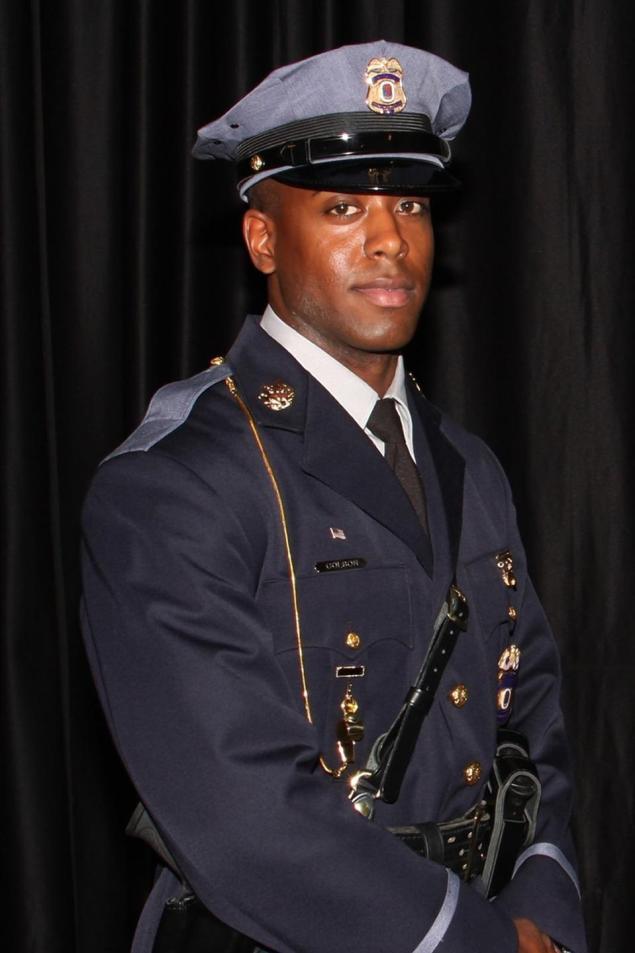
    RIP Detective Colson

    “The shot that struck and killed Detective Colson was deliberately aimed at him by another police officer,” Stawinski said. “It’s another tragic dimension to this unfolding story.”

    Ouch.

    A black cop in civilian clothes being killed by other cop? This is not exactly frequent… but it is all too regular.

    In 170 years of US policing, you know how many white cops have been killed in similar cases of mistaken identity? Best I know, four. (Jenkins, Skagen, Stamp, and Breitkopf)

    Here’s my previous post.

  • Things cops watch

    I don’t post a lot of these videos, but this one is revealing. I honestly didn’t know which way this was going to go. Indian River Country, Florida, December, 2015. 3AM. A man has just gone to the convenience store to buy cigarettes. He’s riding a scooter without tags (that’s southern for “license plate”).

    Stop the video right at 00:15. Don’t go a second further.

    The video:

    Ask yourself what you would do or do differently as the police officer. As a non-police officer, what would your reaction be if the cop aggressively brought this guy to the ground right there and then? Police brutality? White cop attacking unarmed black man? It’s easy to imagine the officer being criticized for excessive use of force.

    Most non-police will probably see a seemingly compliant black suspect asking a white officer, “What’s the problem, sir?… No, no, no, no, I don’t want no problem.” Just a minor traffic violation.

    Of course nobody knows if the suspect is armed or what he is thinking. And that’s the problem.

    The man’s son said:

    It’s crazy how it happened…. I don’t understand how it happened, from you going to the store on a scooter. What was the point of stopping him?… When I left him, he didn’t have no gun…. He doesn’t carry weapons at all. He doesn’t have any enemies. He doesn’t feel threatened by anyone.

    Who do you believe?

    Now watch the rest of the video.

    After being shot in the leg, the cop manages to shoot and hit the suspect twice. Impressive. The suspect was later found by a dog. Both men lived.

    Here are the warning signs (AKA things you should watch for as cop and not do if you’re not a cop):

    0:04: “Don’t go reaching into anything,” says the cop. Fair enough.

    0:05: Why does the suspect hold his hand up like he can tell the cop to stop? That’s not allowed. But as a cop I would probably let that slide. What can you do? But it’s a sign.

    0:09: The suspect gets off the hood, like he was a choice to disobey an officer’s order. I don’t know what I would have done, but I’ll tell what the cop should have done: take the guy down without hesitation. Or create space. But that’s easy to say in hindsight.

    It happened so fast. It often does. I’d like to think otherwise, but I probably would have been shot.

    My sergeant’s words come to mind: “Never arrest alone.” Words to live by.

  • When the police reform issue is actually a “law reform” issue

    My once (and probably future) co-author Nick Selby has this piece in the Washington Post:

    But a closer look at some statistics shows that the problem is not necessarily an issue of racist cops, and that means fixing the criminal justice system isn’t just an issue of addressing racism in uniform.

    Some racial disparities in treatment by authorities actually appear to be the result of state laws intended to crack down on offenses like drunk driving and scofflaws that have, instead, had the effect of ensnaring poor people in a revolving door of debt, courts, collections firms and police.

    Suspended-license or no-license tickets are expensive. Why were so many blacks and Latinos driving on suspended or missing licenses?

    Poverty.

    But the way Texas tracks stops obscures the broader unfair effects of the law on poor people, and makes it look, instead, like police are the problem. In our subject city, less than 7 percent of the population is black, but in 2015, 11 percent of the people pulled over there were.

    That’s as far as Texas’ racial profiling laws want police chiefs to take their analysis.

    We wanted to compare the traffic stop data to the population of the entire area where drivers came from…. and we compared that model against the race and ethnicity of the drivers who got pulled over.

    Chiefs often do not conduct [more detailed] analyses (which are required to recognize these patterns) because they spend their scarce resources complying with well-intentioned but ill-informed and often underfunded racial reporting requirements.

  • “Justice 4 Whom”?!

    “Justice 4 Whom”?!

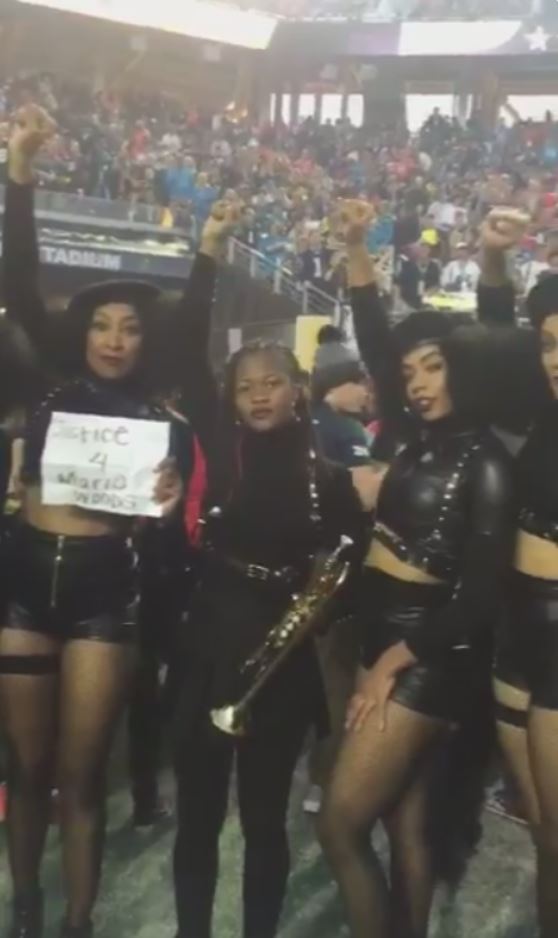
    Generally I couldn’t care less what Beyonce’s dancers think. But “Justice 4 Mario Woods” and a black power salute? Are you effing kidding me? Mario Woods was shot and killed by San Francisco police back in December. It was a good shooting.

    Christ almighty there are plenty of bad police shootings. Not this one. Woods doesn’t need justice. “Justice 4 Mario Woods” means there was an injustice done by police. But right there and then, Mario Woods was armed and dangerous and needed to be stopped.

    Crazy Mario Woods had already stabbed a stranger. And now he’s just walking down the street holding the bloody knife. Police tell him to drop the knife. He won’t. Police knew Woods had knife, had just used it, and may have wanted to use it again. Police use less lethal force… one, two, three, four, and five times. Woods won’t drop the knife even after being beanbagged and tased. It’s like he’s on a mission. (Based on what Woods said, I suspect this was suicide by cop.) If he gets closer to others and starts cutting, police might not be able to shoot. It’s a crowded street. Woods needed to be stopped.

    The Guardian, which since Coldbath Fields Riot of 1833 has published exactly one unbiased story about police, says, “Mario Woods was allegedly armed with a kitchen knife.” No. He had just tried to kill somebody. He was armed with a kitchen knife.

    One thing that bothers me about press accounts of this incident are journalists who still talk about the knife being “alleged” or the victim being “allegedly” stabbed. For legal reasons, I understand why you might throw in “alleged” when describing the suspect. But when the suspect is dead, you can drop the “alleged” crap. Dead men can’t sue any more than than they can be convicted of crime.

    The very first reporter who called me, the one who brought this shooting to my attention, mentioned almost in passing that Woods “allegedly stabbed somebody.”

    “What?” I said, “Well, that would really matters to police. He had just cut somebody? That would change everything.”

    “Allegedly,” she insisted.

    “Well, did he just cut somebody or not?!” To police, this detail would matter tremendously.

    To the best of my memory, I swear the reporter said: “Yes, but he hadn’t been convicted yet.”

    I felt like I was entering the Bizarro world of liberal media make-believe I’ve heard conservatives foam about. Did she really expect police to wait until conviction before deciding the victim was real and knife sharp? Go tell the stabbed dude he was only “allegedly” stabbed. Here’s what the actual victim did say:

    “I’m trying to get my life together. My life has been a shambles since this happened.”… “I got stabbed by someone I don’t even know and I don’t have a beef with or anything like that.”… Jacob says he is the forgotten victim, the one who was attacked and the victim protesters and city officials have ignored.

    Woods, who according to his mom and lawyer was a gentle man (of course) who was turning his life around (“He was really kind and easy to deal with and really appreciative. Terrific. Never aggressive”) had an extensive violent criminal history. He had spent nearly all his adult life in prison. Now Woods’s record doesn’t mean cops get to kill him for no reason, but it might shed some light on why Woods would do some crazy shit.

  • The Denominator Problem: Throwing stones from glass houses

    There’s something bordering on the absurd when newspapers write stories about police racism based on claims like, “90 percent of those arrested are African-American while African Americans make up only 65 percent of the population.” The assertion, sometimes explicit and sometimes implied, is that cops are racists hunting black men. Same thing with papers that assume that any arrest not prosecuted is a bad arrests. [That link is particularly great because it features a video from 3 days after the riot explaining, in a progressive wet dream, how “Gangs work together to restore peace in Baltimore.” Aw, how sweet. How did that work out?]

    The absurdity comes from the lack of consideration for the denominator. If you want to talk about race and arrest or traffic stops or use-of-force or anything, you need a relevant denominator. What percent of those with whom cops interact are black? What percent of those who commit violent crimes are black? Answering any one of these won’t answer the question, but it does help complete the picture.

    I mean, what if I told you that 40 percent of the people arrested for murder were black in a country that is 13 percent black. Knowing nothing else, it’s a meaningless statement. Does that imply cops are disproportionately arresting black men for murder? Well, actually… yes. But whether that disproportion is a problem is something else. The arrest and incarceration rates should reflect the crime rate more than the population demographics, I would think. Without looking at the racial disparity in homicide, the racial disparity in the arrest rate for homicide (or incarceration rate or those killed by police) means almost nothing.

    Police use of lethal force, I would posit, should reflect the demographics of armed violent criminals more than the US Census count of population.

    And yet time and time again you see police blamed for racial disparities in society. I honestly don’t know if reporters make these errors out of statistical ignorance or ideological conviction. But either way, college educated journalists should know better. In a similar manner, let me call outsome of the same papers that make these claims. The American Society of News Editors calculates minority representation at newspapers. The Washington Post is 31 percent “minority” (and 14 percent black) in a city that is 60 percent minority! (And 51 percent black.) The New York Times is 19 percent “minority” (and 8 percent black) in a city that is 65 percent minority! (And 25 percent black.)

    [I put minority in “quotes” because minority percentage is often used as a cover for just how few actual blacks are involved. As if, given America’s legacy of slavery and racism, hiring a Chinese immigrant, a “person of color,” is the same as hiring a born-in-Baltimore African American. (Fun fact: did you know that Italian-Americans are an officially recognized minority group at my school when it comes to hiring and promotion?)]

    So should the workforce at a newspaper represent the demographics or the city? I don’t know. Maybe. Or should it reflect the demographics of its readers? Or maybe the demographics of America (36 percent minority). Or maybe just the demographics of those who graduate from journalism school? I don’t know. Sure, it’s a good debate to have. Just like the debate about minority representation in police departments is good to have. But it seems odd for a newspaper that is 46(!) “percent points more white than the residents” to fault police departmentsthat actually does a much better job and reflecting the diversity of the community it serves.

  • Does rhetoric incite violence?

    Why don’t anti-abortion politicians who say ‪#‎BlackLivesMatter‬-rhetoric endangers cops take responsibility for Officer Swasey’s murder at Planned Parenthood?

    If anti-abortion rhetoric doesn’t have any relation to the murder of Officer Swasey and innocent women at Planned Parenthood, how could anti-cop rhetoric have any relation to people attacking cops? On the flip side, if anti-abortion rhetoric does incite violence against abortion clinics, why wouldn’t the same be true for anti-cop rhetoric and subsequent attacks on cops?

    As to the question of rhetoric inciting violence, shouldn’t we at least be consistent? It’s frustrating when ideology and making political points seem more important than the murder of police officers and other innocent people.

    Update: When I posted this idea on Twitter, I got one response saying that we shouldn’t “jump to conclusions” that the attack on Planned Parenthood has anything to do with anti-abortion rhetoric. Of course not.

    On the other side, somebody from the Left informed me that #BlackLivesMatter isn’t anti-cop, “it is [just] against the abuse of law enforcement in taking of black lives.” Besides, “violence in #BLM rhetoric is self-defense.” Of course….Just like pro-life people are really only against the abuse fetuses take when aborted.

    So can rhetoric lead to violence? Sure, sometimes. But if so, do we just accept it as an unfortunately side-effect of free speech in a gun-loving society? I would say yes, at least up to a point. But regardless, we shouldn’t say that only people on the other ideological side can be inspired into violent action by idiotic rhetoric.