Tag: terrorism

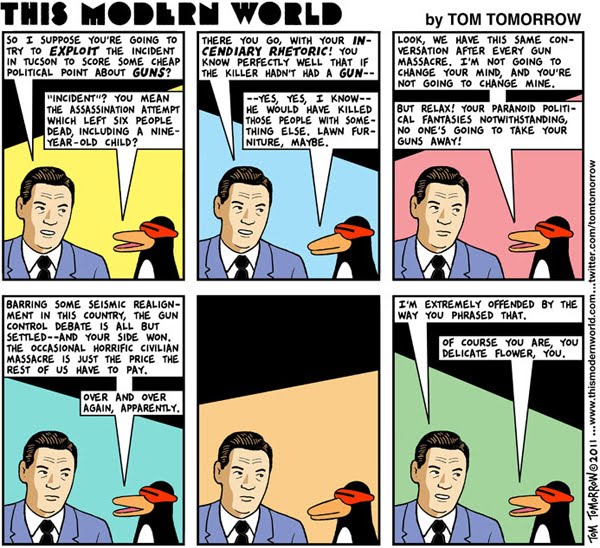
  • Gun Control? “Your Side Won”

    Gun Control? “Your Side Won”

    First published many years ago. I’ll just keep doing so.

    Tom Tomorrow, one of my favorite cartoonists, summarizes gun control and killings quite well. Click through to read.

    “Barring some seismic realignment in this country, the gun control debate is all but settled–and your side won. The occasional horrific civilian massacre is just the price the rest of us have to pay.”

    “But relax,” as the penguin says, “Your paranoid political fantasies notwithstanding, no one’s going to take your guns away!”

    Here’s a more recent one. Tom Tomorrow hasn’t lost it.

  • Bratton on Cruz

    Bill Bratton in the Daily News:

    There seems to be a widespread belief among certain members of the political class that protecting the country against terrorism is a matter of ideology. According to them, the strong leaders in this area are the ones who are willing to insult Muslims, advocate torture, and engage in various other provocations. They claim that other leaders are paralyzed by political correctness and that they alone have the ideological fortitude to guard against the terrorist threat.

    Recently, Republican presidential candidate Ted Cruz called for police to “patrol and secure Muslim communities before they become radicalized.” We already patrol and secure Muslim neighborhoods, the same way we patrol and secure other neighborhoods.

    In New York City, we protect all communities from crime and terrorism — yes, Muslim communities too — because like us, they are Americans who own businesses, work hard, pay taxes and dream of a better life for their children. Over 900 of them work in my police department as police officers, many of them in counterterrorism and intelligence. Many of them have served in the military and fought for their country.

    For what it’s worth, I wrote this a few years ago about the problems of “Demographics Unit” 2006 report.

  • Jew for a Day

    So I was in this 3 AM bar fight last night. More of a scuffle really. Technically I won, if such a thing is possible. (Does anybody really win a 3 AM bar fight?) Now those who know me know my fuse in long. I don’t go looking for fights, because I don’t want to lose a fight. Hell, I’ve never even been in a bar fight. But sometimes, well, a man’s gotta do what a man’s gotta do.

    I was minding my own business (of course) nursing a Smithwicks, and next thing you know, not far from me, a guy is getting choked out. Hmmmmm. The choker has the guy in a classic arm-bar choke hold. I’m looking at this thinking, is he choking him by the throat or carotid artery? While I’m processing the scene, the guy I was talking to, a cop (recently retired), starts shouting, “Don’t choke him out. Let him go. Don’t kill him. Don’t choke him out.” It was a carotid hold; the cop was thinking faster than me.

    The choker lets up. He doesn’t choke him out. The chokee stumbles to his feet. The choker gathers his belongings and high tails it on out of the bar. Word at the bar is that the chokee, a white guy maybe 30 years old, started the mess by accusing the the choker, a brown skinned guy, of being a terrorist. A Muslim terrorist.

    The cop informs the loser that since he, the cop, just saved his life, he, the loser, needs to buy him a drink. The chokee slides the cop his Jägermeister. The cop turns it down and demands a real drink. The loser buys him a whiskey.

    I’m thinking it doesn’t seem right that the guy who got called a terrorist left (thought it a wise choice to do so) and the guy who thinks called a brown person a terrorist is still here. There’s some side debate as to whether the choker even was Muslim. But whatever.

    Maybe fifteen minutes later a few people go out to smoke or pee and now there’s nobody between me and self-proclaimed patriot. I ask him, “Did you really call him a Muslim terrorist?” He hems and haws but does not deny. A press a bit and he he admits that yes, he thinks he is a terrorist.

    I say: “You called a stranger in a bar a Muslim terrorist? Well, you deserved to get choked out.”

    In an ignorant way too common among fools, he boasts, “I’m an American!”

    “We’re all Americans here.” I point out, “This is America.”

    He gets closer to me. I take note that he’s drunker and slower than me as he points his finger at my chest and says, “Are you a Christian, or A JEW?”

    No. Not in my city. Not in my bar. I figure if a first scuffle didn’t get him kicked out, a second one sure will. I don’t lose my temper. I’m not angry. In a calculated move I knock him from his bar stool and drag him to the ground and try and get my hands around his fleshy throat.

    He resists, of course. My glasses go flying (which shows I’m a novice–an experienced fighter would know to remove any glasses before a scuffle). I end up on top. A patron rescues my glasses. No punches are thrown. We get separated. I don’t even get an adrenaline rush.

    I inform the bar, “He has to go.” He bellies up and tries to order another drink. “No,” I instruct him, “you have to go.” The bartender says, “Not before he settles up.” The bartender makes him pay (no buy-backs for him), and he leaves.

    The cop buys me a drink.

    The bartender (who actually isn’t an American) sheepishly admits in his Slovak accent, “I’m not a fighter.” Neither am I.

  • “The Islamic State bombed a neighborhood [in Beirut], not a ‘Hezbollah stronghold.’”

    My friend Annia Ciezadlo wrote this piece for the Washington Post. How come when innocent Parisians were killed by terrorists, everybody shed a tear? (as they should)

    But when innocent Beirutis get killed by terrorists, they’re described as living in an “Hezbollah stronghold.”

    If you’re too lazy to click though, here’s a chunk of it:

    The Syrian refugee crisis has had a crushing impact here [in Beirut]. According to the official numbers, there is one Syrian refugee for every four Lebanese…. If the European Union took as many Syrian refugees as Lebanon has, proportionally, the number would be upwards of 300 million.

    In Beirut you see the impact of this every day….Every night, Syrian women and children fill the streets, begging or selling Kleenex and flowers. Every winter, when the rain and snow come, a handful of Syrian children in flimsy tents freeze to death.

    Does the world only care about Syrian refugees, or victims of the Islamic State, if they’re in Europe?

    I don’t think so. As a writer, and a journalist, I think part of the explanation for this double standard is language.

    In the Western press, Lebanon is a country perpetually at war. To Western readers, the pressures of a 25 percent population increase, a war next door, and another series of bombings don’t seem like an inconvenience, because most Americans think of war when they think of Beirut.

    The beauties of everyday life — the smell of fresh bread from a bakery, the laughter of children on their way to school, lovers sitting in a cafe — don’t define Beirut’s image in the West the way they do for a city like Paris. And yet all those things happen here, too. They are the daily neighborhood life that the bombing here, like the one in Paris, was calculated to destroy.

    But when there’s a bombing in Beirut, nobody mentions these things.

    On Friday, my news feeds were full of articles describing Bourj al-Barajneh as a “Hezbollah stronghold.”

    This language is ubiquitous: On Sunday, when French warplanes bombed the Syrian city of Raqqa, English-language newspapers described it as an “ISIS stronghold.” As an English-language reader, you could be forgiven for imagining the Middle East as a series of strongholds, linked together by stretches of desert and the occasional camel.

    Why does this matter? Because it describes civilians in terms that make them sound, however subtly or unconsciously, like combatants. Like a bastion, or a battlement, the literal meaning of a stronghold is a location that people barricade themselves behind and launch attacks from. It’s not a neutral way to describe a civilian neighborhood that has just been bombed. It implies that the civilians who live there are part of the military campaigns of the people who are in charge.

    In Raqqa, for example, plenty of civilians who are not Islamic State sympathizers aren’t able to leave. Describing it as a “stronghold” implies that they support the Islamic State when they are effectively being held hostage by it.

    When a Western city is attacked, we see the city’s security measures as vindicated by the killings, not as subtle justifications for them. We do not cite them as evidence that the victims were living in a “stronghold” of militarism.

  • Why police need big guns

    My man Eugene O’Donnell wrote this in the Daily News. It’s worth reading, given general opposition (including some from me) to the militarization of police:

    At present only a handful of police departments have the capacity to intimidate would-be terrorists and, if need be, wage sustained combat against them in the streets of America. This is a weakness to correct, not a condition to celebrate.

  • I am Ahmed Merabet

    Let’s not forget the French police officers who were killed. Particularly Ahmed Merabet, who died protecting other people’s right to make fun of his religion.

    David Brooks has an interesting take on the matter. While deliberate provocation is best left at the kids’ table, let’s not get too on our high-horse about our own dedication to free speech:

    Let’s face it: If they had tried to publish their satirical newspaper on any American university campus over the last two decades it wouldn’t have lasted 30 seconds. Student and faculty groups would have accused them of hate speech. The administration would have cut financing and shut them down.

    Americans may laud Charlie Hebdo for being brave enough to publish cartoons ridiculing the Prophet Muhammad, but, if Ayaan Hirsi Ali is invited to campus, there are often calls to deny her a podium.

    It’s a good time to come up with a less hypocritical approach to our own controversial figures, provocateurs and satirists.

    In most societies, there’s the adults’ table and there’s the kids’ table. The people who read Le Monde or the establishment organs are at the adults’ table. The jesters, the holy fools and people like Ann Coulter and Bill Maher are at the kids’ table. They’re not granted complete respectability, but they are heard because in their unguided missile manner, they sometimes say necessary things that no one else is saying.

    Healthy societies, in other words, don’t suppress speech, but they do grant different standing to different sorts of people. Wise and considerate scholars are heard with high respect. Satirists are heard with bemused semirespect. Racists and anti-Semites are heard through a filter of opprobrium and disrespect. People who want to be heard attentively have to earn it through their conduct.

    The massacre at Charlie Hebdo should be an occasion to end speech codes. And it should remind us to be legally tolerant toward offensive voices, even as we are socially discriminating.

  • Draw Mohammed Day (II)

    Draw Mohammed Day (II)

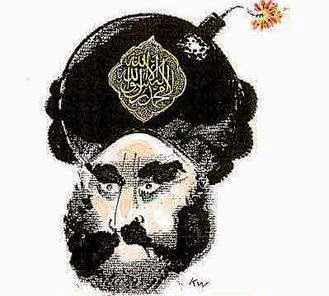
    I suppose today is just as good as any day to link to my post from 2010: Draw Mohammed Day. This is the cartoon that started it all (though this was Norway, I think, and not France). But click through for more.

    Meanwhile it’s worth posting this article from the Onion in 2012: “No One Murdered Because Of This Image”

    WASHINGTON—Following the publication of the image above, in which the most cherished figures from multiple religious faiths were depicted engaging in a lascivious sex act of considerable depravity, no one was murdered, beaten, or had their lives threatened, sources reported Thursday. The image of the Hebrew prophet Moses high-fiving Jesus Christ as both are having their erect penises vigorously masturbated by Ganesha, all while the Hindu deity anally penetrates Buddha with his fist, reportedly went online at 6:45 p.m. EDT, after which not a single bomb threat was made against the organization responsible, nor did the person who created the cartoon go home fearing for his life in any way. Though some members of the Jewish, Christian, Hindu, and Buddhist faiths were reportedly offended by the image, sources confirmed that upon seeing it, they simply shook their heads, rolled their eyes, and continued on with their day.

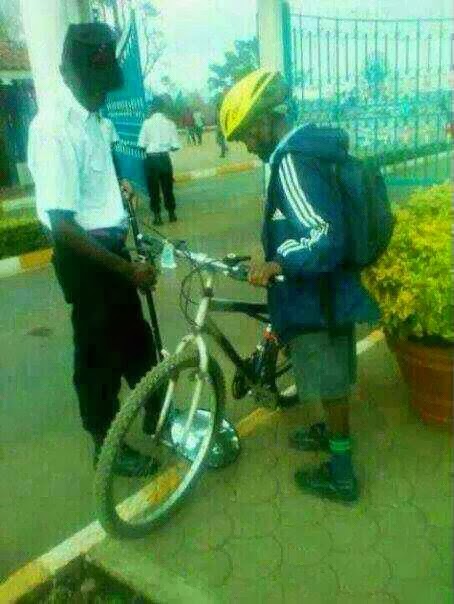
  • Keeping the homeland safe from bike bombs

    Keeping the homeland safe from bike bombs

    While in Rwanda, as we entered some place, the underside of our car was getting “mirrored” by some old guy with a mirror on a stick. I rolled my eyes and said to my friends: “Like he was any clue what a bomb looks like. This is just what we call in America ‘security theater.’”

    My friend pulled out his mobile and showed me this picture.

  • The Intellegence of the NYPD’s Demographics Unit

    The Intellegence of the NYPD’s Demographics Unit

    I am a day late and a dollar short on this, because these AP reportson the NYPD Intelligence Division “Demographics Unit” came out in 2011 and 2012 (mostly when I was out of the country). The reports are from 2006, but only now am I fully appreciating them. Here’s New York Magazine’s more recent take on the whole operation. Of course the NYPD has a long tradition of mapping “seditious ethnic groups,” so it’s not exactly earth-shattering news. (Less traditional is spying on student organization at my school.)
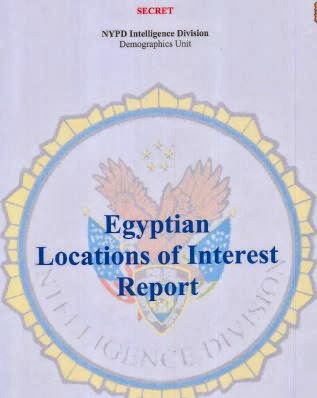
    The NYPD went out and collected (very basic) information on groups of Muslim immigrants. Here are the reports on those from Egypt, Syria, and Albania. Some, myself included, might say that the NYPD should know where different groups hang out. Indeed, at a very basic level this should be considered very basic police knowledge. Too bad they get it wrong.

    Any actual beat officer would know this information. Just as people who live in the neighborhood do. But apparently the NYPD lacks day-to-day knowledge of the communities they serve and protect, so they have to rely on undercover officers to “rake” the community. This is wrong. As is much of the information the NYPD gathered.

    I could have told the NYPD information about the locations in my neighborhood (including a place near me they missed because it’s a few blocks away from where “they” usually hang out).

    The report expressly says it excluded Egyptian Christians from surveillance. So it’s explicitly a religious witch hunt, but the dumb “intel” officers include a lot of Christian places by mistake. Apparently the “rakers” who are supposed to keep us safe from Muslim extremists can’t tell the difference between Christians and Muslims. They all look Arab, I suppose.

    And the facts about the country in question are so mindlessly copied from the web that we get to read about the “richness of the annual Nile river flood.” I’m surprised there wasn’t clip art of the pyramids.

    Naturally the first place I looked up was the place I know best: Kabab Cafe. The owner, Ali, is a friend of mine.
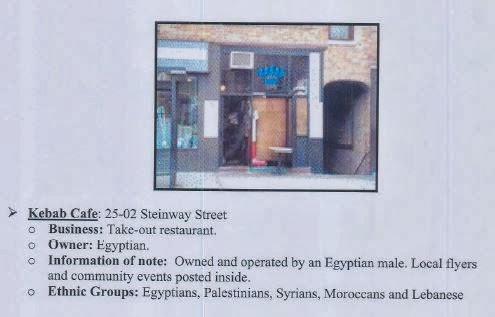
    I can tell you a lot about Kabab Cafe, but I’m not a trained and active “intel” officer. So what did the NYPD’s Demographics Unit come up with? For starters, they misspelled the name of the restaurant. It’s Kabab with two A’s. And they got the address wrong. It’s located at 25-12 Steinway. Good work, guys. Maybe next time check out a Zagat Guide.

    The “ethnic groups” that might be found at said location of interest? “Egyptian, Palestinians, Syrians, Moroccans, and Lebanese.” That’s also wrong. Ali does draw a diverse crowd, but his place is not an Arab hangout. Truth be told, at $30 to $50 per person, this place is kind of pricey for Queens. If I had to categorize, I’d say those who dine at Kabab Cafe are predominantly “hipsters” and “Jews.”

    And the “local flyers and community events posted inside”? No. Not there. Unless you think that’s what the anti-Mubarak poster is.

    The NYPD lists my friend as an “Egyptian male.” That’s arguably correct, even though he’s non-religious and has been an American citizen longer than I’ve been alive.

    It’s amazing that so much incorrect information can be packed into just 35 words of “intel”!

    But that’s not all. The business is listed as a “take-out restaurant,” which happens to be wrong. If you ask politely Ali will do take-out, but it’s not really his gig.

    You’d learn a lot more reading about his restaurant in the New York Times or New York Magazine. Or perhaps you saw Ali on TV, as he was featured in Anthony Bourdain and Andrew Zimmern’s TV show. He also starred in an episode of Jammie Oliver’s American Road Trip (an episode that also features my wife, just braggin’).

    Across Steinway Street is another place, listed as “Egyptian Cafe.” My wife tells me that’s not the name of the place, which is clearly written in Arabic. But my wife reads Arabic, which apparently the “rakers” didn’t (though maybe they did, in which case they’re just really really stupid). Also, this Queens location is listed as being in Brooklyn.

    Why is Kabab Cafe a “location of interest”? Naturally, “detectives gravitated toward the best food.” I would. New York reported:

    It nagged [Lieutenant] Berdecia to see his talented detectives sitting around eating kebabs and buying pastries, hoping to stumble onto something. If it was worth writing up a report, it was worth conducting an investigation. “It irritated me to send a lot of second-grade detectives and first-grade detectives to sit in coffee shops with nothing going on. If we hear something, then let’s do more proactive police work. Let’s run plates. Let’s follow guys.” But as the years passed under Berdecia’s supervision, the Demographics Unit never built a single case. “It was a bunch of bullshit,” Berdecia said.

    Now of course my friend isn’t a terrorist, and he’s got nothing to hide. So no harm done, right? Except the information gathered by the NYPD is completely and comically wrong. And that is potentially harmful.

    So I don’t know what bothers me more, that the NYPD spies on people solely on their perceived religion and nothing else, or that the NYPD has done so with such complete and total incompetence. I mean, how can I focus on the morality and constitutionality of the Demographics Unit if they can’t even spell the names right and write down the correct address?!

    But short of some fact checking (have they heard of google?), this police work should not be done undercover. No police work should be done undercover unless it has to be. Not only does does a uniform or badge make the difference between honest police work and a secret state security apparatus, but undercover officers are less effective. If you want basic information, you need a beat cop (or a resident) who has an eye, an ear, and half a brain.

    But how, you might say, would police discover terrorist plots while walking the beat in uniform? Good question. First, good people might actually talk to police, if only they saw police to talk to. This is how the NYPD foiled the 1997 subway bombing that wasn’t. People snitch. This is how most big arrests are made. And it’s a bit harder to feel the love if you’re being spied on, which is what you call secret police work based on no actual suspicion of criminal wrong doing.

    Second, the secret Demographic Unit didn’t uncover any plots. The latter point is important — perhaps not a moral and constitutional level — but certainly an operational and police level.

    The only actual “intel” from this report seems to be which of these places believed to be run by or cater to Muslims watch Arabic-language Al-Jezeera news on TV. Well, I hate to break it to you Fox News believers, but Al-Jezeerais an actual news channel. And truth be told, it’s a pretty good one.

    Just because Al-Jezeera has an Arabic name does not mean it is a terrorist organization. That might be the real take-home lesson.
  • We are shocked…

    As usual David Simon makes a lot of sense. But what I don’t understand, and what bothers me most about the whole deal, is why it had to be a secret. If this were really a “healthy” discussion we should be having, then why did it take a whistleblower to start it? hard to imagine we’re less safe because it’s not a secret (there might even be a greater deterrent effect now).

    I also don’t like such intelligence being subcontracted to private companies. The last thing we need is an intelligence-industrial complex giving money to congress and getting laws passed similar to the military- and prison-industrial complexes.