Tag: war on drugs

  • What do we do with all that weed?

    What do we do with all that weed?

    Explain this to me:

    In the past few weeks about 155 tonsof marijuana has been stopped from coming in from Mexico. Numbers of that magnitude tend to numb. I have no idea what 155 tons means. So I did some figuring. 155 tons is about 1,500 big men (or 3,000 very petite women). It’s about 1.3 times what the space shuttle weighs (at landing). It’s a lot.

    And, according to the magic elves at google, 155 tons is 4,960,000 ounces, or about an 1/8th of an ounce for every 6 adults in the USA.

    Can’t picture an eighth-of an ounce? According to some crack online research hereand here, 1/8 oz. is roughly equal to the amount of tobacco in 4 cigarettes (or 3 cigarettes whole). 1/8 oz of marijuana is more than enough to get a few people nice and high.

    Now keep in mind, 1) there’s a lot weed grown right here in the ol’ US of A, and 2) There’s a lot of weed still coming in from Mexico.

    So how much marijuana are we as a country smoking? The amount seems truly amazingly astronomical.
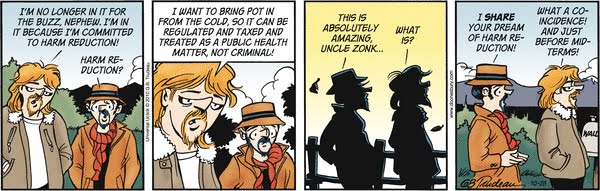
  • War on Drug Continues

    It didn’t surprise me that Prop 19 lost. I’m still amazed that it did so well and was taken so seriously. A lot of progress has been made over the past 10 years. I suppose only history will tell if we’ll look back on this as the high point (there was really no pun intended when I first wrote that) or whether it’s just a step down the path toward a better drug policy.

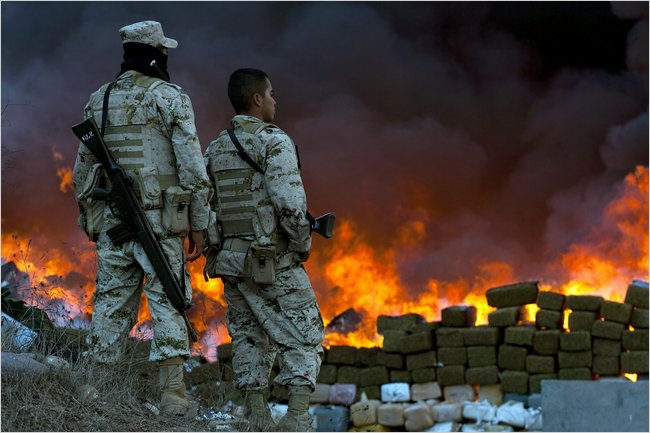
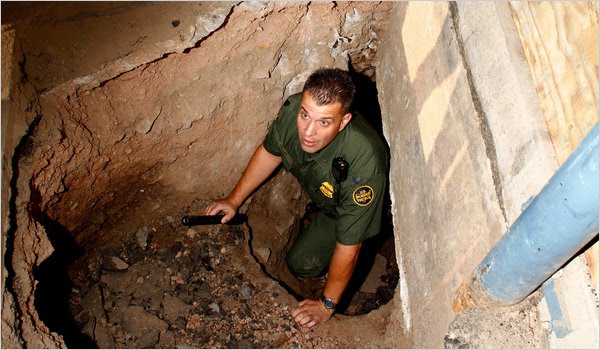
    Meanwhile, another secret tunnel was found from Mexico. It included 25 tons of the maryjane. English Aljazeerareports. And that’s on top of the 134 tons the other week.

    I say this in my best whiny Mike Bloomberg voice: “People, it’s the tunnels that make us less safe, not the drugs.” I don’t want people building tunnels under the border. But they will as long as we keep building walls on top of them and fighting “wars” against things and people from Mexico.

    Here’s a good story in the Christian Science Monitoron the tunneland one on the Latin American leaders and the failure of Prop 19. Here’s a good quote: “The two presidents who have come out strongly against legalization [in Mexico and Columbia] are presidents who have received a combined total of nearly $9 billion from the United States government.”

  • Reality-Based Thinking

    The key is to un-learn the academic habit of treating every proposition and argument offered as needing to be taken seriously and requiring a refutation, if false.

    Note to self: Making sh*t up is a valuable research technique. Must use it more often.

    So says Mark Kleiman.

    [thanks to Jay]

  • Gruesome Pics…

    Gruesome Pics…

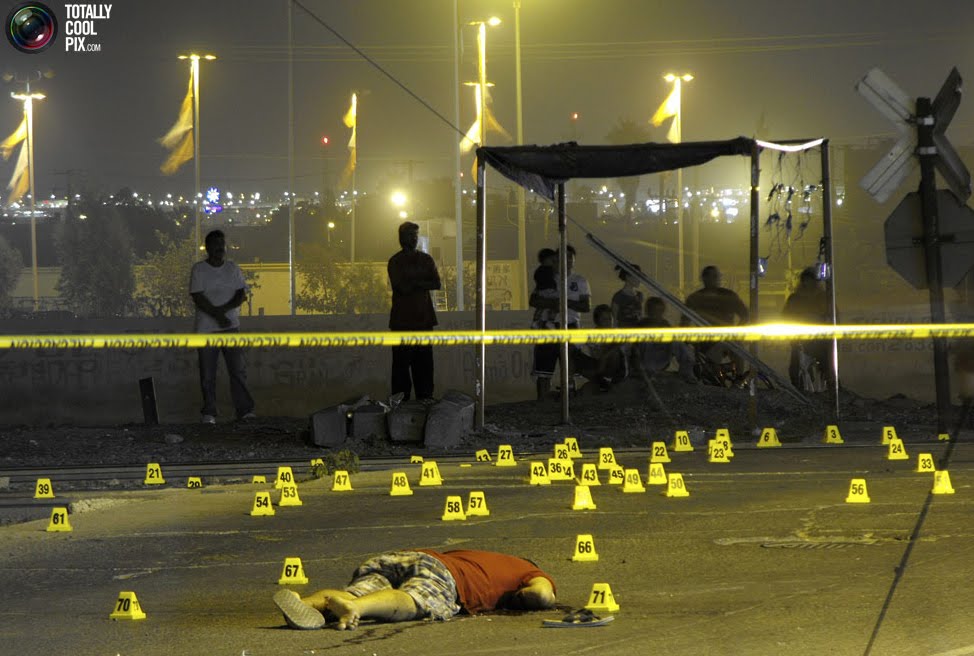
    …of the war in the drugs, mostly in Mexico.

    While you lose you appetite looking at these, remember the US party line that violence in Mexico is a sign the drug gangs are on the run.

    War is peace!

    (I’ve never seen those evidence cones get to number 71… and we had some pretty big shootings in Baltimore.)

    [thanks to Irish Pirate for the tip]

  • Smoke and Horrors

    Smoke and Horrors

    Charles Blow of the New York Times write about drugs (and yes, that is his real name), specifically about the racial disparity in marijuana arrests. Some people just don’t seem to care, but it seems to be a fundamental issue about fairness in justice.

    Whites and blacks smoke weed at nearly similar rates (actually whites smoke more), and yet blacks get arrested for it far more often. This report reflects more good work by Queens College professor Harry Levine:

    From 2006 through 2008, police in 25 of California’s major cities have ar­rested blacks for low-level marijuana possession at four, five, six, seven and even twelve times the rate of whites.

    The City of Los Angeles, with ten percent of California’s population, arrested blacks for marijuana possession at seven times the rate of whites.

    These racially-biased marijuana arrests were a system-wide phenomenon, occurring in every county and nearly every police department in California. They were not mainly the result of individual prejudice or racism. In making these arrests, patrol officers were doing what they were assigned to do.

    Doesn’t that matter?

  • 134 Tons of Marijuana, Up in Smoke

    134 Tons of Marijuana, Up in Smoke


    That’s a lot of weed.

    And yet somehow I don’t feel any safer.

    Remember when bringing in weed from Mexico was all fun and laughs? Those were the days.

  • Abolish Drunk Driving Laws?

    So says Radley Balko: “If lawmakers are serious about saving lives, they should focus on impairment, not alcohol.” I’m not certain where I stand on this, but it does make some sense. Plus, I always appreciate counter-intuitive thinking.

  • The Murderers of Mexico

    The Murderers of Mexico

    How to write about Mexico’s drug war? There are only a limited number of ways that readers can be reminded of the desperate acts of human sacrifice that go on every day in this country, or of the by now calamitous statistics: the nearly 28,000 people who have been killed in drug-related battles or assassinations since President Felipe Calderón took power almost four years ago, the thousands of kidnappings, the wanton acts of rape and torture, the growing number of orphaned children.

    It may not be easy, but Alma Guillermoprieto does a pretty good job of writing about Mexico’s drug war in The New York Review of Books. I haven’t read any of the books reviewed, but the review itself is well worth reading (as a good review always is).

    Guillermoprieto ends with this:

    There is little doubt that Calderón’s strategy of waging all-out war to solve a criminal problem has not worked. Whether any strategy at all can work, as long as global demand persists for a product that is illegal throughout the world, is a question that has been repeated ad nauseam. But it remains the indispensable question to consider.

    There are the books reviewed:

    Atentamente, El Chapo (Sincerely, El Chapo) by Héctor de Mauleón

    La Ruta de Sangre de Beltrán Leyva (The Path of Blood of Beltrán Leyva) by Héctor de Mauleón

    Drug War Zone: Frontline Dispatches from the Streets of El Paso and Juárez by Howard Campbell

    Mafia & Co.: The Criminal Networks in Mexico, Brazil, and Colombia by Juan Carlos Garzón, translated from the Spanish by Kathy Ogle

  • What do you expect?

    What do you expect?

    “The longshoremen were paid $50,000 to $100,000 for unloading a single duffel bag of cocaine.” I’m glad nobody has offered me that kind of money for that kind of work, because I don’t know what I would do.

    Meanwhile the tunnel from Mexico business is booming, which is an unfortunate but inevitable result (along with migrants dying in the desert) of building a big wall in a stupid attempt to “seal” the border. It may not sound ideal (hell, it’s not) but we have to accept that we can’t completely control our borders. I’m sorry if you don’t like it, but that’s the realty. Does that mean we shouldn’t tryto seal our borders? Well, actually, yes. Because attempts to “close our border” creates unintended consequences that are even worse.

    So we need to figure out the best policies we can implement with porous borders. It actually isbetter to have people and contraband cross on land than underground. Sure, people could always have built tunnels, but they didn’t. It’s an scary development because we have almost no control over what goes through the tunnels. We actually had a bit more control over what came across on land.

    And once again, I’d like to point out that these problems are not caused by drugs. They’re caused by the war on drugs. It happens again and again.