Tag: war on drugs

  • Taxed Marijuana In Rhode Island?

    There’s yet morerationality in the news today!

    Let’s stop quibbling about decriminalized marijuana for dying people and get to the heart of the matter: legalize, regulate, and tax. That’s what they’re looking into in Rhode Island. Katherine Gregg reportsin the Providence Journal:

    The measure poses a number of specific questions for study, among them: “Whether and to what extent Rhode Island youth have access to marijuana despite current laws prohibiting its use. … Whether adults’ use of marijuana has decreased since marijuana became illegal in Rhode Island in 1918. … Whether the current system of marijuana prohibition has created violence in the state of Rhode Island against users or among those who sell marijuana. … Whether the proceeds from the sales of marijuana are funding organized crime, including drug cartels. … Whether those who sell marijuana on the criminal market may also sell other drugs, thus increasing the chances that youth will use other illegal substances.”

    The resolution also cites questions about the “dangers associated with marijuana resulting from it being sold on the criminal market, including if it is ever contaminated or laced with other drugs.”

    The panel has until Jan. 31, 2010, to report its findings and recommendations to the Senate.

  • Testifying Crime Lab Techs

    In the Supreme Court round up, I’m happy that 13-year-olds can’t be forced to strip for suspicion of carrying ibuprofen. Clarence Thomas once again comes out as the dufus court jester in the 8-1 decision: “Preservation of order, discipline and safety in public schools is simply not the domain of the Constitution.” No, Sir. But strip searches are.

    What is shocking (really) is the decision, overturning 90 years of precedent, that lab analysis must testify in court. Leaving aside the constitutional issues for now, this is a hugedecision. And the court broke down in a very unusual way in its 5-4 decision.

    According to the New York Times 500 employees of the FBI laboratory in Quantico conduct more than a million tests a year. Justice Kennedy wrote in dissent: “The court’s decision means that before any of those million tests reaches a jury, at least one of the laboratory’s analysts must board a plane, find his or her way to an unfamiliar courthouse and sit there waiting to read aloud notes made months ago.” Just like a cop. And then the will be postponed.

    Constitutionally, from my amateur perspective, it seems like a sound decision (Remember that just because you don’t like something doesn’t mean the constitution is or should be on your side).

    For the majority, Scalia writes, “the best indication that the sky will not fall after today’s decision is that it has not done so already. Many States have already adopted the constitutional rule we announce today.” I hope he’s right. But the sky really may fall, at least at bit.

    How from the lab is supposed to testify? One person? Everybody?

    On this I believe the dissent when they say, “Requiring even one of these individuals to testify threatens to disrupt if not end many prosecutions where guilt is clear but a newly found formalism now holds sway.”

    Compare that with the majority opinion, “Nor will defense attorneys want to antagonize the judge or jury by wasting their time with the appearance of a witness whose testimony defense counsel does not intend to rebut in any fashion.” Really? That ain’t how it is in the Eastside District Court.

    Regardless, the court writes:

    The Confrontation Clause [of the 6th Amendment] may make the prosecution of criminals more burdensome, but that is equally true of the right to trial by jury and the privilege against self-incrimination. The Confrontation Clause–like those other constitutional provisions–is binding, and we may not disregard it at our convenience.

    I wish he was just as strict in interpreting the Fourth Amendment. I’m not a fan of the Confrontation Clause in the U.S. It makes it too hard to convict and thus contributes to a system plea bargains where innocent people plea guilty and guilty people go free. It would be better if a signed affidavit counted as an officer’s appearance. Ifthere were need to question the officer’s report, then call in the officer.

    In other countries, like the Netherlands, police generally don’t go to court (unless something is very wrong). For this (and many other reasons) their court system works much better than ours, both to convict the guilty and protect the innocent.

    But we do have the 6th Amendment and now the Confrontation Clause is stronger than ever.

    So what might happen? Somehow, of course, the system will adapt.

    More than 95% of prosecuted cases never go to trial. So perhaps for them, nothing. But even for plea-bargained cases, the state might have to be ready to go for two or three appearances before the plea bargain is accepted. Now, along with having an officer present, a lab tech will have to be present. This will cost money and further slow down justice.

    There might be more smaller labs doing work closer to the court. And there might be the need for a lot more crime lab techs who suddenly discover the wonders of court overtime pay. And you’d hate to think of overtime pay influencing theirwork. But remember that this whole case came about because of bad lab tech work.

    Maybe a lot more people will be charged with offenses related to drug. Maybe a lot more cases will be dropped. Maybe more defendants will demand jury trials and the whole system will grind to inglorious halt. Or maybe, just maybe, the sham that passes for criminal justice will continue without pause, no matter what the Supreme Court says the Constitution means, in theory.

    A dysfunctional justice system benefits nobody.
  • Not so fine a line after all

    Looks like the line between paying a C.I. and criminal bribery isn’t so fine after all. Thanks to Marc S. for commenting on this post and informing me that what the DEA agent did is in fact a crime. It’s called commercial bribing in the second degree and in New York State it’s a class A misdemeanor. Had the $1,000 offer been one cent higher, it would have been a felony. That makes me think that the guy offering the bribe knew the law a lot better than I did.

    A person is guilty of commercial bribing in the second degree when he confers, or offers or agrees to confer, any benefit upon any employee, agent or fiduciary without the consent of the latter`s employer or principal, with intent to influence his conduct in relation to his employer`s or principal`s affairs.

  • The fine line between confidential informant and bribe

    A friend of mine, who only wants to be broadly identified as being in a form of “real estate business” in New York City, routinely complains to me about police trying, without a search warrant, to bully and threaten his employees in order to gain access to clients’ private property or information on someone or something.

    My friend is more than happy, even eager, to work legally with law enforcement. In the same law-abiding spirit, he has a very healthy respect for the Bill of Rights, the 4th Amendment in particular.

    Well I get this email today:

    Yesterday, a DEA agent tried to bribe one of my employees to provide him with access to customer information and to provide tips in the future.

    I was pretty pissed. We always cooperate on this stuff to the letter of the law. Then the agent asked to speak to the employee in private and pulled this stunt.

    $1,000 was the amount offered, probably dependent on future information.

    It’s dirty, but as long as the employee was properly signed up as a confidential informant and there was paperwork for it all, it could all be legal and by the book.

    I asked why he thought the employee didn’t take the money. My friend said three reasons: “1. He’s a good guy; 2. He knows we always follow the law; 3. He knows we’d fire him if we found out.”

  • P.G. County Sheriff Clears Itself In Calvo Raid

    Imagine that.

    The Agitator pretty much sums it up.

    And here’s the story in the Washington Post.

    The best line is: “In the sense that we kept these drugs from reaching our streets, this operation was a success.” But, uh, you already had the drugs, remember? Then instead of taking them off the streets you gave them to the Calvos.

    They really have no shame.

  • Drug Decriminalization in Mexico

    The Mexican legislature has voted to decriminalize possession of up to 5 grams of marijuana, 1/2 gram of cocaine, 40 milligrams of methamphetamine, and 50 milligrams of heroin.

    From the story by Tracy Wilkinson in the LA Times:

    The battle between law enforcement authorities and drug suspects has claimed more than 11,000 lives since he took office in late 2006.

    In May 2006, then-President Vicente Fox … backed down only under pressure from the Bush administration, which complained that decriminalization for even small amounts could increase use.

    But with about two weeks to go before crucial mid-term elections in which his party is struggling to maintain control of Congress, Calderon cannot afford to be seen as bowing to the United States, analysts say.

    Already under intense criticism for the drug-related violence, Calderon needs to maintain good relations with his nation’s Congress, where much of the opposition voted in favor of the decriminalization bill.

    And so, political observers say, he probably will sign it into law.

  • I’m Back

    I’m back from two weeks in Spain… but I’ll spare you the details except to say there was hiking in the Alpujarras involved. And very sore feet. And lots of pork.

    Meanwhile, I was just quoted in a widely read article (the AP is great for that) about dirty narcs in NYC. Though I don’t condone it, I don’t have a lot of sympathy for criminals when they get framed. But there really is nothing worse than framing an innocent man.

    And an off-duty black NYPD officer, Omar Edwards, was killed by fellow police officers.

    Do white officers ever get killed in similar circumstances? Rarely. I know of only one case, in Florida, when a white officer was shot and killed accidentally by police. He was undercover and busting a group of (gasp) underage college tailgaters.

    Part of the problem is that as a police officer chasing a criminal, when you hear police shouting, you don’t think they’re shouting at you. You know you’re police. You feel it. You’re used to hearing commands to show your hands and drop the gun. You shout such commands. You’re a cop. You don’t drop your gun. But you can’t see yourself and see you’re out of uniform and holding a gun. I don’t know what the answer is.

    In other news, Nicholas Kristof wrote a powerful piece in the New York Times, Drugs Won the War. He mentions LEAP prominently.

    And on Friday I’ll be in Chicago for an interview on WGN’s Milt Rosenberg show. 9 – 11 pm Chicago time. I’m very excited about that. You can listen here.

  • It all goes back to the war on drugs

    I’m supposed to grading papers so I’ll keep this short. But what does the police beating in Birmingham and the foiled terrorist plot in New York have in common?

    Neither would have happened were it not for the war on drugs.

    Three of the four bad guys in New York were in prison… for drug offenses. In prison they “converted” and hatched their little plan.

    And the guy who tried to kill a cop in Birmingham was fleeing… because of drugs.

    We need to legalize drugs not because drugs are good, but because locking people up for drugs makes them worse.

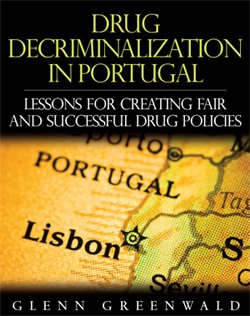
  • Drug Decriminalization in Portugal

    Drug Decriminalization in Portugal


    If you have an hour-plus to spare, listen to Glenn Greenwald talk about Portugal’s experience with drug decriminalization since 2001. Here’s a link to the video and also a downloadable audio podcast.

    Under Portugal’s new regime, people found guilty of possessing small amounts of drugs are sent to a panel consisting of a psychologist, social worker and legal adviser for appropriate treatment (which may be refused without criminal punishment), instead of jail.

    That’s from an article in Time. And here’s Greenwald writing in Salon.

    First the facts: drug use has declined. Repeat: decriminalization does not increase drug use.

    Greenwald addresses this and other points. For instance, the myth of American exceptionalism. This is tendency of some to discount any foreign case study simply because it’s not here. “The U.S. isn’t like the Netherlands.” “The U.S. isn’t like Portugal.” OK… But this argument looks pretty feeble as more and more countries try decriminalization successfully. The onus should now be on the naysayers to explain just exactly what differences in these countries make their experiences so inapplicable to us here in the U.S.

    Greenwald also addresses the logical difficulty many have in comprehending how decriminalization could possibly mean less drug use. Even though the facts consistently indicate that liberal drug policies reduce drug use, people just don’t believe it. So Greenwalk talks about why. Only with decriminalization can the government and even health-care workers effectively reach drug users. Only with ending the war on drugs does the government have the money to offer treatment and educate the public.

    So why decriminalization rather than legalization? Because of international treaties and pressure from the U.S. and other countries to keep up the war on drugs. In fact, in the Portuguese model, legalization was taken off the table from the very beginning. Given the political situation, it simply was not an option. The shame with not going all out and regulating the drug trade is that you are unlikely to get any decrease in prohibition-related violence.

    Peter Reuter provides a counterpoint of sorts about half-way through, arguing that decriminalization wasn’t so much a failure, but rather that it didn’t actually matter that much. But he concludes that the study is, “One more piece of evidence which helps strengthen the argument that decriminalization would have minimal adverse consequences and very substantial desirable consequences.”

    Greenwald says his main take-home point that can transform the drug-policy debate is that decriminalization won’t lead to an explosion of drug usage. “This shatters… the central myth that drives virtually even drug policy debate in this country.”

  • Balto Cops Bust Wrong Door, Leave it Hanging

    My NYPD students tell me that New York doesget the doors they bust down fixed. Not in Baltimore.

    Police bust down your door in the course of duty? It’s on you. Even if it turns out you’re innocent.

    Peter Hermann writes:

    First city cops bust down the wrong door on a drug raid. Then, when Andrew Leonard tries to get the city to put his door back, the city tells him to forget about it — Baltimore police may have the wrong house but they had the right address on the warrant. So the raid team didn’t make the mistake; the person who wrote the warrant did. Makes no difference as far as city liability goes.

    But Mr. Leonard’s problems don’t end there. After he tried but failed to get public works to pick up his broken door and throw it away, a city in

    [Update]