Tag: war on drugs

  • Massachusetts deals with decriminalized marijuana

    While the California prison guards helped defeat Prop. 5, stoners nationwide are lighting up splifs in celebration of their marijuana victories: Michigan became the first state in the Midwest to pass a medical marijuana measure. More significantly, Massachusetts passed a referendum decriminalizing possession of less than a ounce of marijuana. Possession will be a civil fine of $100. That’s good (though it won’t do anything to reduce drug-prohibition-related violence).

    Amazingly, despite the opposition of the governor, most politicians, and all of law enforcement, the referendum was supported by 65%of voters.

    Arlington Chief Frederick Ryan was stupid enough to admit that without crazy harsh penalties for marijuana, it will be harder to get people to work as police snitches. Why is Chief Ryan stupid? Because he just admitted something that is almost assuredly against his own department’s regulations and perhaps illegal and unconstitutional, to boot. You see, you can’t tell people to work undercover for the police and if they don’t, you’ll through them in jail. Of course that’s what happens all the time, but it’s not allowed.

    Everybody knows snitches work for the police to save their own hide and shouldn’t be trusted, but you’re not allowed to officially offer them a quid pro quo. In theory, and legally, all confidential informants work voluntarily because they want to do the right thing.

    Frank Pasquerello, a spokesman for the Cambridge Police Department, wondered whether officers will have to start carrying scales. Uh, Frank? No.

    Chelsea Chief Brian Kyes, more of a thinking man, wonders what this will mean for issues of probable cause. That’s a good question. I’d like to know the answer.

    Boston commissioner Edward F. Davis seems to have a good head on his shoulders. He said the law should not be harder to enforce than others on the books: “I’m disappointed that it went through… but I don’t think the sky is falling by any stretch of the imagination.”

    The whole story by David Abel of the Globeis here.
  • Prop. 5 and the Prison Guards’ Union

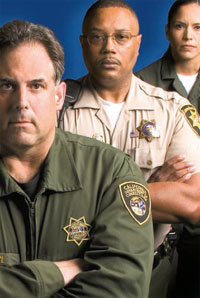
    Prop. 5 and the Prison Guards’ Union

    The California Correctional Peace Officers Association (CCPOA) is the union for prison guards. I’m all for unions for prison guards. They have a tough job, horrible working conditions (uh, prison), and I certain would not want their job.
    I believe their union should have a loud and robust voice on such things as pay, working conditions, health-care benefits, and retirement pension.

    But prison guards, or correctional officers, as the prefer to be called (even though they don’t do much correcting), should have novoice on sentencing policy. Think of it like the maker of electric chairs giving big bucks to politicians that support the pro-death.

    When it comes to locking people up, guess which side the union takes? They want more prisoners. For prison guards, prisoners are jobs. And the more prisoners the better. More prisoners means more guards and more union power to get more prisoners. Shame.

    In 1994, the CCPOA “strongly backed” (that’s their words) Prop 184, three strikes and you’re out.

    In 2004, the CCPOA strongly opposed Prop 66 which would have softened the state’s three-strikes law by restricting the second and third strikes to violent felonies. The proposition was narrowly defeated.

    Now they’re against California’s Prop 5. To be honest, the details of Prop 5 aren’t important. Not to the union. All that matters is whether or not the proposition would increase or decrease the number of prisoners. Prop 5 would divert people away from the prison system (related to non-violent drug offenders). That’s a good thing if you’re a tax payer or a human being. But it’s bad if you see the prison complex as one giant jobs program.

    When it comes to government jobs programs, I’d much prefer to actually build roads and bridges and parks, WPAstyle. But that, I suppose, is socialist.

  • Budget cutting? Take a hatchet to the war on drugs

    Joe Conason has a good piece in Salon about the war on drugs. Want to cut waste and abuse? How about starting with the $50 billion we spend every year on the war on drugs. And why aren’t either McCain or Obama talking it?

  • Another Isolated Incident

    “It’s not that SWAT tactics are always wrong. It’s that they’re frighteningly too often the first resort with the police departments that have them.” That’s from The Agitator. It’s worth reading.

  • War on Drugs in Mexico

    Drug Killings Haunt Mexican Schoolchildren

    See the New York Times for the whole terrible story.

  • Are drugs evil?

    This is taken from the comments of a previous post.

    Your comparison of a drug dealer to anyone who sells cigarettes and booze is interesting. I believe that even with the huge tobacco lobby at work, most tobacco products will be illegal within twenty years, and rightfully so. Booze is a different story because it is well tolerated by many who use it and not as addictive as amphetamines, opiates or nicotine.

    I can’t argue against legalization of marijuana because too many studies have suggested a low addiction and personal harm factor. The addiction and personal harm factors for cocaine, heroin and meth far surpass those for marijuana though, and I believe that if you are to make an argument for legalization it has to overcome the harm caused by using a substance.

    Even with this academic B.S. aside, you have been to the streets where non-addicted dealers see what their product does to their customers, the desperation the ability to drop all semblance of humanity just to get high. Why do you defend those who lack the moral clarity to continue selling these substances when they see what it does to people? Or to put it another way, I have never seen a male heterosexual cigarette smoker offer to perform oral sex on a male 7-11 clerk just to get a pack of cigarettes. (Same goes for a marijuana user-It’s not the price it’s the drug.)

    I like your last point! And it’s valid. I think the answer is quite simple: cigarettes are not as bad as crack and heroin. Yes, cigarettes kill a lot of people, but a nicotine addict is not like a crack addict.

    But I don’t believe there is a fundamental difference between one addictive drug and another. Alcohol does ruin lives. Cigarettes kill people. But heroin and crack can do it in a particularly ugly manner (not that throat cancer is pretty).

    Here’s the point: regulation does not equal approval. If regulation could lower drug use–and there’s every reason to think it can–then we should regulate.

    Plus I refuse to play the “moral clarity” game. There are recreational cocaine users just like there are recreational drinkers.

    I don’t believe drugs are evil. I think some drugs for some people are bad. I think heroin and crystal meth are very bad for almost all people. Many of my best friends regularly use alcohol, cigarettes, marijuana, and ecstasy without fucking up themselves, their families, or their jobs. They’re not evil.

    But my point isn’t to encourage use. Quite the opposite: it’s to discourage use. And since the U.S. has the highest usage rate in the world for pretty much every illegal drug, it’s safe to say our current war on drugs doesn’t work.

    The idea of condemning the morality of drug dealers to me is a little silly. Unless you’re willing to say capitalize is evil (and though it may be, I’m not), I’m not going to say drug dealing is evil. They used to say that about music, sports, and alcohol. Is it wrong to sell to drugs addict? Maybe. So what about methadone clinics?

    And besides, condemn all you want, if we lock up one drug dealer, another will sell. That’s the problem: we CAN’T STOP drug dealing. Repeat that. We can’t stop drug dealing. Once we accept that, we can figure out the best way to deal bad substances. And if regulation can lower usage, lessen addiction, and raise money all at the same time, why not give it a try?

  • Victory is Near!

    The Agitator has a good post looking at how failure doesn’t stop our drug warriors from claiming success. The news is always good in the Bizarro World of prohibitionists.

  • Your consitutional rights

    I have advocated that all drug defendants demand jury trials. It’s a constitutional right. It would end the war on drugs.

    That is kind of sort happening on a small scale. Here’s the story in the Sun. Our system of justice is broken.

  • Mexico’s war on drugs

    When we last visited Mexico, tens of thousands were protesting violence resulting from drug prohibition.

    Now Mexican President Felipe Calderón has proposed decriminalized possession of small quantities of cocaine, marijuana, heroin, and methamphetamine to those who agree to undergo drug treatment. This is similar to a bill he proposed two years ago. But that bill died after intense pressure (ie: foreign meddling) from the U.S.

    Here’s the story in the New York Times.
    “The Mexican attorney general’s office has said that it is so overwhelmed with prosecuting organized crime that it cannot handle the large number of small-time drug cases.”

    “United States officials have heaped praise on Mr. Calderón for his crackdown on Mexico’s drug cartels. Since taking office in December 2006, he has sent some 30,000 troops into eight states and cities in an attempt to quell drug violence. But the violence has only increased. Almost 3,000 people have been killed in drug violence this year.”

    “Responding to Mr. Calderón’s plan, American officials said Thursday that United States policy opposed the legalization of even small amounts of drugs. “It rewards the drug traffickers and doesn’t make children’s lives safer,” said an American official, who asked not to be identified.”
    The problem with decriminalizing drug possession is it doesn’t get at the harms of drug prohibition. The violence comes from dealers. Not users.

    And addicts area problem. It helps to have the power of arrest sometimes to keep them in line.

    Still, there is the advantage of not wasting courts and prisons dealing with drug users.

  • Drugs in Afghanistan

    Seems like the brother of Afghanistan President Hamid Karzai is a heroin kingpin operating under U.S.-tolerated immunity.

    I’m shocked. Shocked.