Tag: war on drugs

  • Legal drug shakedown

    NPR has a good story about law enforcement agencies seizing drug assets. It can pay for itself.

    The kicker is this: police prefer to come in after the drugs have been sold because it’s better for police to seize the money rather than the drugs. If police seize the drugs, the drugs are destroyed. If police seize the money from selling the drugs, they get to keep the money.

    Talk about a dirty partnership. I thought robbing drug dealers was a crime.

  • $20 for a cigarette

    In England, the Daily Express reports that drug dealers are getting arrested on purposeso they can make more money by selling drugs in jail.

    A few years ago they banned cigarettes and smoking in Rikers Island (NYC’s jail). Now a single cigarette sells for about $20. For one tobacco cigarette. More often than not, these cigarettes come from correctional officers (i.e.: jail guards).

    If we can’t win the war on drugs in jail, where can we win it?

  • The path to drug regulation?

    I had a thought about your book. This is not a criticism but something I was left wanting when I finished. Someone, somewhere, (and I nominate you) needs to articulate at length a pathway from the current environment towards what decriminalization/legalization would look like.

    If there’s one out there it’s not widely known.

    I think there’s a lot more enthusiasm for legalization than there appears because there’s no channel for it. A lot of people that are for it or at least equivocal would say “let’s give Plan X a try”. Its harder to bring people around to a conceptual, as you know from working the street.

    I also believe (in my tiny little opinion) that the black community would get behind any reasonable pathway presented because they’re paying an outsized price for the war on drugs.

    One thing has occurred to me though: Any plan offered would have to consider the pushback from a multi-billion dollar tax free industry having it’s existence threatened.

    Sgt. [name and e-mail withheld upon request]

    Thanks for the nomination. And that’s a valid complaint about my book. To be honest, I have no idea.

    I’m pretty pessimistic about the whole possibility of any real pullback in the war on drugs. But then I suppose “wets” thought that too, in 1925. Maybe it really does start with medicinal marijuana. Maybe more Americans need to visit Holland. Maybe it has to do with getting the medical industry behind regulation (because they could profit from treatment and would profit from selling legal drugs). Maybe it has to do with finding and outing a criminal element contributing to drug war politicians. Maybe it’s LEAP.

    But it’s not just drug dealers who are against legalization. It’s prison guards. It’s police agencies. It’s the makers of military equipment. It’s the entire prison-industrial complex.

    I’m open to ideas. Comment below.

  • Drug Raid Death Not Guilty

    Drug Raid Death Not Guilty

    Same old same old: Cops bust down door. Drug dealer wakes up and thinks he’s being attacked by criminals. Drug dealer shits his pants. Drug dealer fires off four rounds. Somebody innocent dies, this time a hard-working police officer.

    A sergeant pointed out this story to me. He writes:

    “Yea, it’s Canada, but it’s not too much a stretch to see this happening here. Bottom line: Everyone loses.”

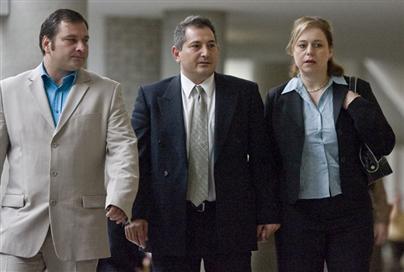
    In the middle is the drug-dealing cop-killing malaka. (Photo by Dave Sidaway)

  • Legal drugs kill more people than illegal drugs

    Damien Cave writes a very interesting story in the New York Times.

    In Florida, which is apparently the only state that keeps good track of these things, the rate of deaths caused by prescription drugs is three times the rate of deaths caused by all illicit drugs combined.

    Out of 168,900 deaths statewide, legal opioids (such as Vicodin and OxyContin) caused 2,328 deaths. Drugs with benzodiazepine (such as Valium and Xanax), led to 743 deaths.

    Cocaine killed 843, methamphetamine killed 25, and heroin was found in the bodies of 110 people who died. Marijuana and ecstasy, of course, killed nobody. That last figure shouldn’t surprise you. If it does, you’ve been bamboozled by lies and the lying prohibitionist liars who tell them.

    Alcohol was judged to cause 466 deaths.

    I’m not certain what this all means. I’ve been told by many of my students–particularly white students from the suburb–that the abuse of prescription drugs is a huge problem. But from both my personal and police experience, prescription drug abuse is all but foreign to me.

    When my wife had emergency heart surgery in 2006, a doctor prescribed me Vicodin. Supposedly this was to treat the not-so-horrible pain I had in a hang-nail caused pinky infection. Really. But really he was just being kind, in a Californian kind of way. So I took a pill. With red wine. The wine part was definitely not recommended by the doctor. But it was on the advice of a friend of mine who does know something about the recreational misuse of prescription pain killers. It did nothing for me. A day or two later I took another pill. Or was it two? Then I gave up. It wasn’t for me. I really don’t understand how pain killers fall in the pleasurable category. But that’s just me.

    But, as Ali G would say, I digest. Regarding drug deaths in Florida, a few thoughts come to mind:

    1) Why are we so worried about illegal drug abuse when a bigger problem is right in front of us? But also, why are so many people dying from regulated drugs? I’ve always argued that regulation prevents overdoses. Doesn’t it?

    2) At least there’s almost no violence around the prescription drug trade. Overdoses aren’t good, but at least doctors and Valium addicts aren’t shooting each other. Drug abuse should be the concern of the individual, the family, and the health care system.

    3) Through health issuance and prescription plans, employers and the government are subsidizing middle-class drug abuse. Tell Rush Limbaugh and your right-wing friends that, the next time they complain about their tax dollars supporting crack addicts.

    [Though in the interest of fairness, tell your liberal friends the un-politically correct truth that a whole lot of crack is bought when the welfare (and social security and disability) checks come out every month.]

    4) If you think race and class aren’t a key part of the war on drugs, ask yourself why we are so quick to demonize and lock up poor people and the same time we offer sympathy and treatment to people who have the money and connections to get addicted to prescription drugs?

    [If more poor people had good relations with doctors and cheap prescription drug coverage, they’d probably be very happy to abuse legal drugs. Hell, if more poor people had good health care coverage, many wouldn’t need to abuse any drug at all.]

    5) If prohibition and incarceration are the answers to our drug problem, why don’t we use the same approach to fight prescription drug abuse? Medical necessity? Next time you pop a Viagra, tell yourself it’s more medically necessary than an emancipated chemo patient smoking a joint. Isn’t Viagra the definition of a recreational drug?
  • Medical Marijuana

    Apparently, the “medicinal” marijuana thing in California is getting a little out of hand.

    Jesse McKinley reports in the New York Times that large-scale commercial growers are hiding behind the state’s legalization of medical marijuana in 1996.

    I’m all for regulating drugs. I want localities to regulate or ban as they wish. Don’t fret at a little blowback in California. Successful regulation is the answer.

  • 2.3 million behind bars

    America’s incarceration population and rate continue to increase. At a cost of about $60 billion per year, we hold 2.3 million people behind bars. Details in the recently released Bureau of Justice Statistics Bulletins Prison Inmates at Midyear 2007 and Jail Inmates at Midyear 2007.

    ABC news reports:

    The report provides a breakdown, noting “of the 2.3 million inmates in custody, 2.1 million were men and 208,300 were women. Black males represented the largest percentage (35.4 percent) of inmates held in custody, followed by white males (32.9 percent) and Hispanic males (17.9 percent).”

    The United States leads the industrialized world in incarceration. In fact, the U.S. rate of incarceration (762 per 100,000) is five to eight times that of other highly developed countries, according to The Sentencing Project, a criminal justice think tank.

  • Drug Massacre Leaves a Mexican Town Terrorized

    As reported by James McKinley Jr. in the New York Times:

    On the night of May 17, dozens of men with assault rifles rolled into town in several trucks and shot up the place [Villa Ahumada]. They killed the police chief, two officers and three civilians. Then they carried off about 10 people, witnesses said. Only one has been found, dead and wrapped in a carpet in Ciudad Juárez.

    The entire municipal police force quit after the attack, and officials fled the town for several days, leaving so hastily that they did not release the petty criminals held in the town lockup. The state and federal governments sent in 300 troops and 16 state police officers, restoring an uneasy semblance of order. But townspeople remain terrified.

  • Take your $1.4 billion and stuff it!

    That’s what Mexico may tell the U.S. So reports Laurence Iliff in the Dallas Morning News. Good for them.

    Here’s the backstory: The U.S. offers money to other countries so they can join our glorious war on drugs. To get the money–and here’s the catch–other countries had to pass a formal (now less formal) “certification” process where we tell them if they’re doing enough to fight the war on drugs, if their judicial system is good, and if their human rights record passes our test. We obviously can judge these things, you know, because our record in the war on drugs has been nothing but success after success in what is now a drug-free America!

    Mexico considered certification a violation of its sovereignty. “Why don’t we tell the Americans to use those [funds] for their own interdiction forces or interception forces … and stop the flow of weapons,” [Mexican assistant attorney general for international affairs] Santiago Vasconcelos said in a radio interview. “Rather than giving them to Mexico, they can be used by the Americans to reinforce their Customs service, their Border Patrol, and stop the arms trafficking to our country.”

    Oh, snap!

    I’m always amazed how arrogant the war on drugs makes us. Mexican police are getting killed in battle right and left, but we’ll tell them if they’re doing enough to fight drugs. Can you imagine our reaction if, after September 11, 2001, other countries offered us big bucks but only if we could certify to their standards that we were really serious about fighting terrorists?

    What if Mexico offered us billions of pesos to protect New Orleans from hurricane damage, but only if we let their army corp of engineers certify the quality of our levies? (I mention this example because time and time again, Mexico proves very able at hurricane disaster relief. Kudos to them.)

    Can you imagine how insulted we would be if Cuba offered us billions of dollars, but only if we, say, ended the practice of electing judges, abolished the death penalty, found a way to cut our prison population by 80%, and agreed to end our Cuban embargo?

    As soon as New Orleans was destroyed by hurricane Katrina, Cuba offered us 1,500 doctors and 26 tones of medicine and aid. No strings attached (except political embarrassment)! We turned them down. Seems we were already doing a heck of a job. About 2,000 people died (we don’t even know for sure) and we couldn’t get clean water in for days.

    Anyway, I hope Mexico doestell the U.S. to stuff it. Often these countries know the war on the drugs is stupid and hurts them, but $1.4 billion sure is tough to turn down. That’s a lot of change to fill a lot of pockets. If we bribe enough people, they’ll poison their fields or arm militias or whatever else we tell them to do. I’ve been to both Mexico and Egypt, and let me tell you, they sure have nice police cars… thanks to our money. Too bad none of this money is going to the Baltimore P.D.

  • No Parking = No Drugs?

    No Parking = No Drugs?


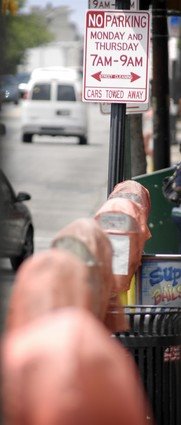
    In a comment, Timothy turned me on to an article by Liz Kay in the Sun, “No parking, Less Drugs.” Leaving aside the grammatical question (it should be “fewer drugs,” right?), what about the concept? They banned parking on part of the business strip of Pennsylvania Avenue to get rid of drug dealers. Apparently, it has gotten a little better. It’s also hurt business.

    [Sun photo by Andrew F. Chung]

    My firstthought is that it’s a dumb idea. As Mr. Sussman, pawnshop owner and president of the Merchants’ Association, is quoted as saying, “Sometimes there’s a worry that you can cure the disease and kill the patient.”

    And I also don’t like a vision that prefers empty streets to streets crowded with non-criminals. That’s very anti Jane Jacobs.

    That being said, there are many things in favor of this idea.

    1) It isan idea. Maybe it’ll work. Maybe not. But I’m all for trying it.

    2) The problem of public drug markets is big. Desperate times often do require desperate actions.

    3) Apparently the business owners support it. As long as the businesses support it, I will, too. In a business strip, the business owners should have a big say. Besides, probably the main people inconvenienced by this are the business owners themselves who park in front of their store and feed the meter all day. I wonder how many of these spaces were open to the public, anyway.

    4) The greater impact seems to result from increased police presence rather than the removal of parking space.

    Is it a long-term solution? Of course not. But I guess it’s worth a try. There are lots of places you can deal drugs in Baltimore. It would be nice if Pennsylvania Avenue weren’t one of them.

    From the article:

    Deidre Danois said she and a friend had to park across the street recently when they stopped on Pennsylvania Avenue to grab some breakfast.

    “I bet you police don’t go up to Roland Park and tell them they can’t park on their street,” Danois said as she shopped at Sweet Sixteen.

    That’s right, hon. Because they’re not dealing drugs in front of stores in Roland Park. She reminds me of one time when I was in the 7-11 at 2300 Orleans St (which is actually the Southeast but we would go there because it was next to 24 post and hell, we didn’t have a 7-11 in the Eastern). I liked this 7-11 because of Lorraine, one of the employees. Sometimes we would swap our respective soul foods. She’d bring me homemade collards and I’d give her just baked spanakopita. Lorraine quit when she won the lottery and got engaged to a nice Indian man. That’s two separate events. I didn’t want her to quit. But hell, could you blame her? Who works midnights in that 7-11 by choice?

    Anyway, this 7-11 could get pretty wild. One night they were out of chili and cheese and posted a sign by the hot dogs saying so. There were a bunch of yo-boys acting up, ordered hot dogs, and hadn’t seen the sign. They were upset that they couldn’t top off their “dugs.” Between curses, one guy shouts, “I bet the white man’s 7-11 has chili!”

    Sure thing, dog, and an open bar, too.